AT&T Stadium, the Dallas Cowboys’ home field, is being overhauled to meet FIFA standards for the upcoming World Cup matches it will host. The venue, which will be renamed Dallas Stadium for the duration of the tournament, is being fitted with a new natural‑grass playing surface and a host of supporting systems to satisfy the governing body’s strict requirements.
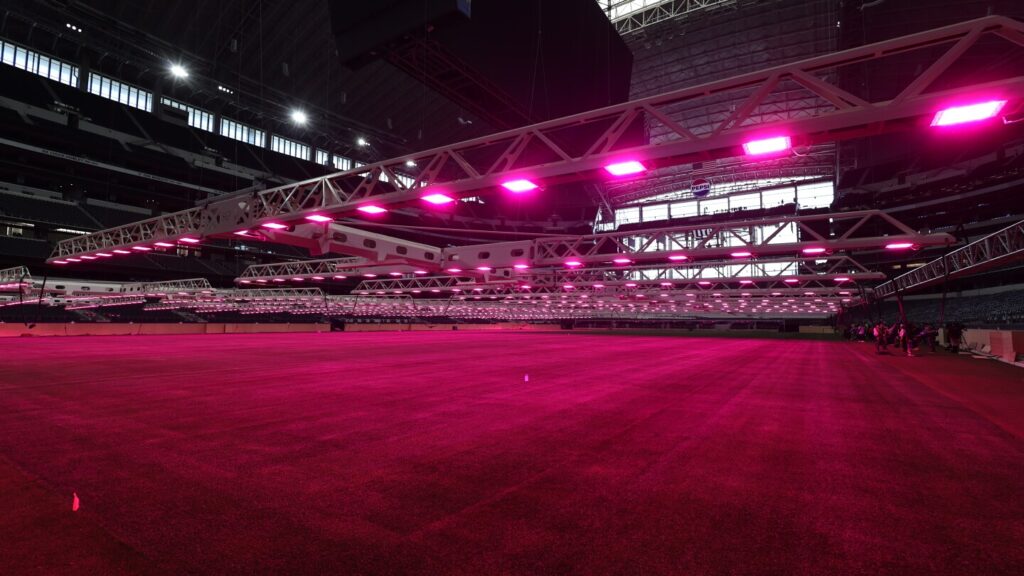
Work on the pitch began with turf grown in Colorado and delivered to the stadium in sections. Beneath the grass, contractors have installed a sophisticated ventilation and irrigation network designed to keep the surface healthy under the intense heat of a Texas summer. Overhead pink lighting has also been mounted to promote uniform growth, giving the field a distinctive glow that has already drawn attention from fans and media alike.
The conversion is a massive undertaking. Project managers estimate roughly 45,000 man‑hours of labour and the use of 15,000 tonnes of material, including soil, drainage components and lighting fixtures. The expense is being absorbed by the stadium’s owners as a necessary investment to secure the World Cup matches, which will number nine in total.
While the renovations are focused on compliance with FIFA, they have sparked conversation among NFL players who have long advocated for a high‑quality natural grass field at the Cowboys’ venue. Veteran wide receiver CeeDee Lamb recently used his Instagram platform to voice support for permanent grass, echoing a broader push from the players’ union for improved playing conditions. However, any permanent change would require modifications to the collective bargaining agreement, and owner Jerry Jones has indicated that the current grass installation is a temporary solution tied specifically to the World Cup schedule.
The short‑term nature of the project means the field will likely revert to its existing artificial surface once the tournament concludes. Yet the effort underscores the logistical challenges of adapting an NFL stadium for world‑class soccer, and highlights the financial and operational commitments host cities are willing to make to attract marquee international events.
As the World Cup draws nearer, the stadium’s transformation will be closely watched by both football officials and NFL stakeholders. The outcome will determine whether the temporary grass installation will leave a lasting impact on discussions about playing‑surface standards in the United States, and could influence future bids by American venues to host large‑scale soccer tournaments.