
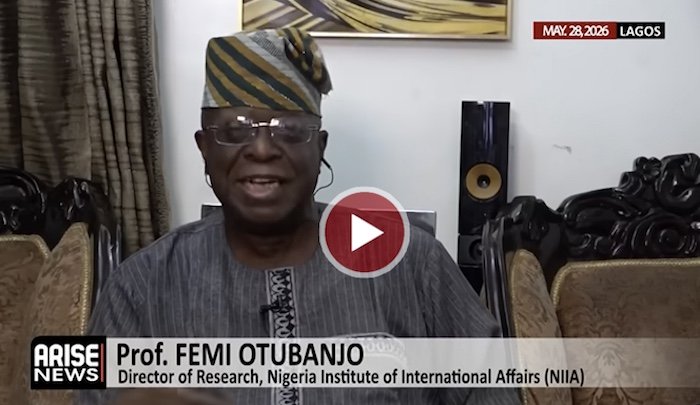
The unfolding leadership crisis in South-South Nigeria has raised fresh questions about President Bola Tinubu‘s political standing in the region ahead of the 2027 elections. A political scientist recently warned that internal disputes within Rivers State could weaken the federal administration’s influence in a part of the country where every vote counts.
What the Rivers leadership crisis involves
Rivers State has seen a series of public and private disputes among party officials, chiefs, and local power brokers that have spilled into the open. Observers point to a mix of contestations over appointments, allegations of exclusion, and clashes between state-level actors and national party operatives as the core drivers of the crisis.
Those tensions have manifested in competing endorsements, legal challenges, and a perceived breakdown of the usual patronage arrangements that bind political coalitions. Analysts say this is not merely a local governance matter: it affects how voters and elites in the South-South view the federal coalition backed by Bola Tinubu.
Why analysts see electoral risk for Tinubu
Political analysts argue that the Rivers turmoil threatens the ruling party’s ability to marshal support in a zone where ethnic and resource politics are deeply intertwined. A prominent political scientist warned that the crisis could erode the president’s advantage by alienating local power brokers and amplifying opposition narratives ahead of 2027.
The argument rests on three linked risks. First, fracturing among local leaders reduces the capacity to mobilize votes and deliver turnouts. Second, visible conflicts create openings for opposition parties to position themselves as alternatives. Third, prolonged instability can shift public perception about the ruling coalition’s effectiveness at mediating local disputes.
Each of these risks matters because the South-South region is strategically important both politically and economically, with communities keenly attuned to federal policy on oil, infrastructure, and development.
Local dynamics that could change national math
At the state level, the crisis has eroded trust between competing factions, prompting defections and contestations that complicate candidate selection and campaign organization. This churn risks producing weak or fractious local tickets that fail to present a united front for national allies.
For President Bola Tinubu, the immediate worry is that a mismanaged resolution could be read as federal neglect or partisan interference, both of which are potent mobilizers for opposition movements. If local grievances remain unaddressed, they can cascade into broader dissatisfaction with the central government.
Additionally, civil society groups and youth movements in the region have shown increasing willingness to translate local grievances into civic action, further complicating the electoral calculations for incumbents. In short, a state-level leadership crisis can have an outsized impact on national-level political forecasts.
Responses from parties and power brokers
Party officials have publicly called for calm and mediation while behind-the-scenes negotiations continue to determine who will command loyalty at the grassroots. The ruling party has dispatched envoys and attempted confidence-building measures, but observers say these interventions have had mixed results.
Opposition actors have seized on the disorder to highlight governance failings and to court disaffected figures. Independently, traditional leaders and business stakeholders are pressing for stability, fearing that continued uncertainty will harm investment and service delivery.
Some analysts note that timely, credible arbitration and transparent appointments can still restore coherence; others warn that superficial fixes may only postpone more severe fractures that will re-emerge during campaign season.
Short- and medium-term implications for 2027
In the short term, the Rivers State crisis is likely to produce localized disruptions: candidate withdrawals, parallel party structures, and legal contests that consume energy and resources. These are transactional harms but can accumulate into larger strategic disadvantages for incumbents.
In the medium term, if unresolved, the crisis could alter coalition dynamics across the South-South, encouraging inter-state coordination among dissatisfied elites and voters. That alignment might reduce the ruling party’s margin in closely contested districts and diminish the bargaining power of national leadership in regional negotiations.
Political forecasting models that rely on stable local networks may need to be adjusted to account for the elevated uncertainty, particularly in resource-rich constituencies where economic grievances intersect with political representation.
What could mitigate the damage
Experts suggest several practical steps to limit the fallout. First, open and credible mediation led by respected neutral figures can help rebuild trust between rival factions. Second, transparent processes for appointments and candidate selection reduce perceptions of favoritism.
Third, meaningful engagement with civil society and community stakeholders can demonstrate responsiveness to citizen concerns, lowering the incentives for oppositional mobilization. Finally, policy responses that address tangible economic and service delivery issues can re-anchor political loyalties on performance rather than patronage.
Outlook and political calculus ahead of 2027
The Rivers leadership crisis illustrates how state-level conflicts can reverberate nationally and shape the strategic environment for the 2027 elections. For President Bola Tinubu, the path to preserving influence in the South-South depends on resolving local disputes in ways that respect regional sensibilities and restore functional party structures.
Whether those outcomes are achieved will partly determine whether the ruling coalition retains its competitive edge or sees its strength in the zone diminished by opponents who capitalize on disorder. The coming months will be critical in deciding if the crisis becomes a manageable local episode or a defining factor in the broader electoral map for 2027.


Comments are closed for this story.