
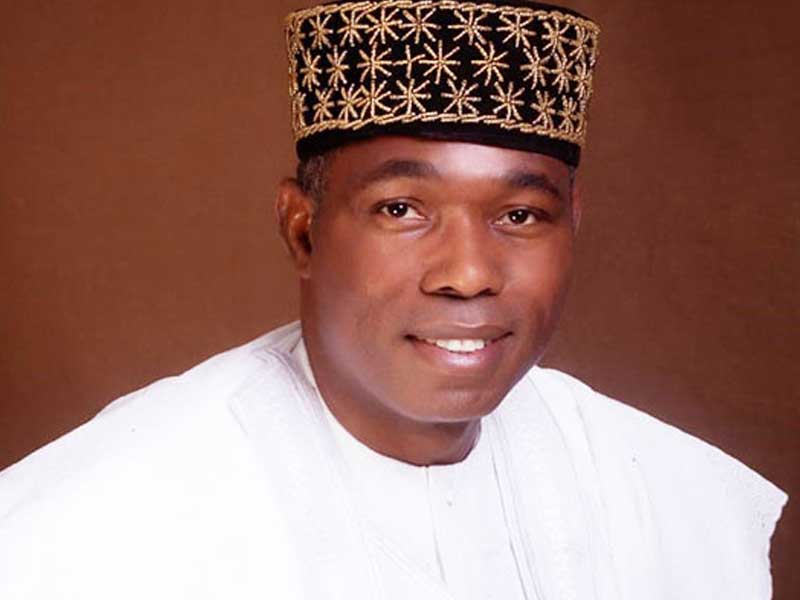
In the heart of Bauchi, a political storm is brewing. The Social Democratic Party didn’t just pick a presidential candidate at the Abubakar Tafawa Balewa Stadium; they launched a full-scale ideological war against the status quo. Prince Adewole Adebayo, the party’s flagbearer for the 2027 election, used his acceptance speech not to ask for votes, but to declare a rebellion against what he calls a slide into one-man rule under President Bola Tinubu and the APC.
But this was more than a rally. It was a meeting of minds—welfarists, constitutional reformers, Pan-Africanists, and anti-establishment figures—all looking for a home beyond the APC and a fractured PDP. The crowd included Oba Oladipo Olaitan of Afenifere, who didn’t mince words: “Nigeria is bleeding. The suffering is not an act of God. It’s the result of wrong choices and neo-liberal policies that put elite comfort above people.”
The convention itself was a triumph of survival. For years, the SDP was torn apart by leadership battles, factional fights, and accusations of outside meddling. Holding this convention sent a clear message: the party is still standing. Adebayo warned that even the APC is oppressed by its own system, where one person chooses everyone. “What we are doing here today, they cannot do it,” he said.
Adebayo’s speech was a raw, populist assault on the status quo. He painted a picture of a broken Nigeria—unemployment, insecurity, corruption—and asked why presidents travel abroad for medical care while women give birth under trees. He accused Tinubu of deepening poverty through subsidy removal and heavy borrowing. His most biting line: “I am an enemy of poverty, and poverty is Tinubu’s friend.”
Critics called it combative, but supporters saw it as a long-overdue truth. More importantly, Adebayo anchored his message on Chapter II of the Constitution, which mandates welfare and security for citizens. He promised to use Nigeria’s resources for the people’s good, setting the SDP apart from a party he says doesn’t believe in that.
The convention also tried to revive ideological politics in a system driven by defections and ethnic deals. Political thinker Olusegun Babalola argued that Nigeria’s crisis is civilizational, not just economic. He pointed to China, India, and Singapore as examples of nations that fused modern systems with their own cultural frameworks. Nigeria, he said, reduces culture to festivals instead of using it as a living constitution for accountability.
A key moment was Afenifere’s endorsement of the SDP. Olaitan praised the party for reflecting the values of social justice and equity, echoing the welfarist tradition of Obafemi Awolowo. He criticized neo-liberal policies and called for public investment in education, healthcare, and local industries.
Despite the energy, the SDP faces huge hurdles. The APC has incumbency power and money. The PDP still has broader national structures. The Labour Party holds sway with urban youth. To compete, the SDP must turn rhetoric into grassroots organization and avoid the internal fights that crippled it before. They also need to make complex ideas simple for voters struggling with inflation and joblessness.
But the Bauchi convention proved one thing: a section of Nigeria’s political class is trying to rebuild opposition around ideas, not just personalities. Adebayo framed the election as a fight between ordinary people and an entrenched elite. Olaitan called it a choice between neo-liberal hardship and social democracy. Babalola elevated it to a question of national identity.
In a political landscape often shallow on philosophy, the SDP has dared to ask an old question: what should the government actually stand for? That question, more than any speech, may be the party’s greatest achievement—a rare attempt to fuse constitutionalism, welfarism, and populist opposition into a coherent narrative. Whether it wins votes remains to be seen, but the conversation has started.



Comments are closed for this story.