For decades, the dream of building machines that fly like birds has lingered on the edge of engineering. Now, that dream is taking off. Across labs worldwide, scientists are tearing apart the mechanics of flapping wings, not just to understand nature, but to build a new generation of aircraft that can dart, hover, and glide in ways conventional drones never could.
The core challenge is deceptively simple: a wing that flaps creates a chaotic dance of lift, thrust, and drag. To unravel this, researchers are turning to high-speed cameras that freeze motion in milliseconds, wind tunnels that simulate the open sky, and computational fluid dynamics models that crunch billions of data points. These tools allow them to see the invisible—the swirling vortices, the pressure waves, and the subtle bending of a wing that happens in a fraction of a heartbeat.
But the real secret lies in the details of the wing itself. Shape, size, and the precise pattern of movement matter immensely. Scientists are dissecting the skeletal and muscular architecture of birds to understand how a seagull, for instance, manages to twist its wing mid-flap to catch a gust or make a sharp turn. That knowledge is being translated directly into artificial wings, which engineers now tune for specific jobs: maximum maneuverability for tight spaces, or energy efficiency for long, silent flights.
Perhaps the most surprising finding is the role of flexibility. A rigid wing is not always better. Flexible wings, it turns out, can adapt on their own to shifting air conditions, absorbing shocks and reducing strain. Using mathematical models like the finite element method, researchers are simulating how these pliable surfaces deform under pressure, revealing ways to harvest energy more effectively and reduce wear on the machines themselves.
The practical applications are staggering. Imagine micro air vehicles, no bigger than a sparrow, slipping through collapsed buildings to find survivors, or hovering silently over crops to monitor health, or darting through urban canyons to track pollution. These flapping-wing drones could go where no rotor-based drone dares to tread, thanks to their ability to change direction instantly and maintain stability in gusty winds.
To measure success, the field relies on a set of elegant metrics. The lift-to-drag ratio tells us how efficiently a wing generates lift relative to the resistance it faces. The thrust-to-power ratio reveals how much forward push we get for every watt of energy. And the Strouhal number, a dimensionless value that links flapping frequency and amplitude to flight speed, serves as a universal benchmark. If a wing’s Strouhal number falls in a certain range, it’s likely to be efficient—whether it belongs to a hummingbird or a robot.
Now, artificial intelligence is entering the picture. Instead of manually testing thousands of wing designs, researchers feed data into machine learning algorithms that can identify optimal patterns, shapes, and materials in a fraction of the time. This is accelerating progress, allowing for rapid prototyping and fine-tuning that was impossible just a few years ago.
Yet the mathematics beneath it all remains deeply rooted in classical physics. The Navier-Stokes equations, which describe how fluids move, are the foundation of every simulation. They govern the flow of air around a flapping wing, and solving them accurately is no small feat. The Strouhal number, meanwhile, offers a simple but powerful way to compare designs across vastly different scales, from a fruit fly to a full-sized aircraft.
There is also a thermodynamic dimension to consider. Flapping wings are not perfectly efficient; they lose energy to viscous friction and heat. This entropy production is an unavoidable cost of flight. Understanding it helps researchers design wings that waste less energy, pushing the limits of what’s aerodynamically possible.
The influence of this research extends far beyond aviation. Insights into wing flexibility are inspiring new biomimetic materials for medical prosthetics. The way a wing adapts to stress could inform the design of soft robotics. Even wind energy harvesting could benefit from the principles of flapping aerodynamics, offering novel ways to capture power from the air.
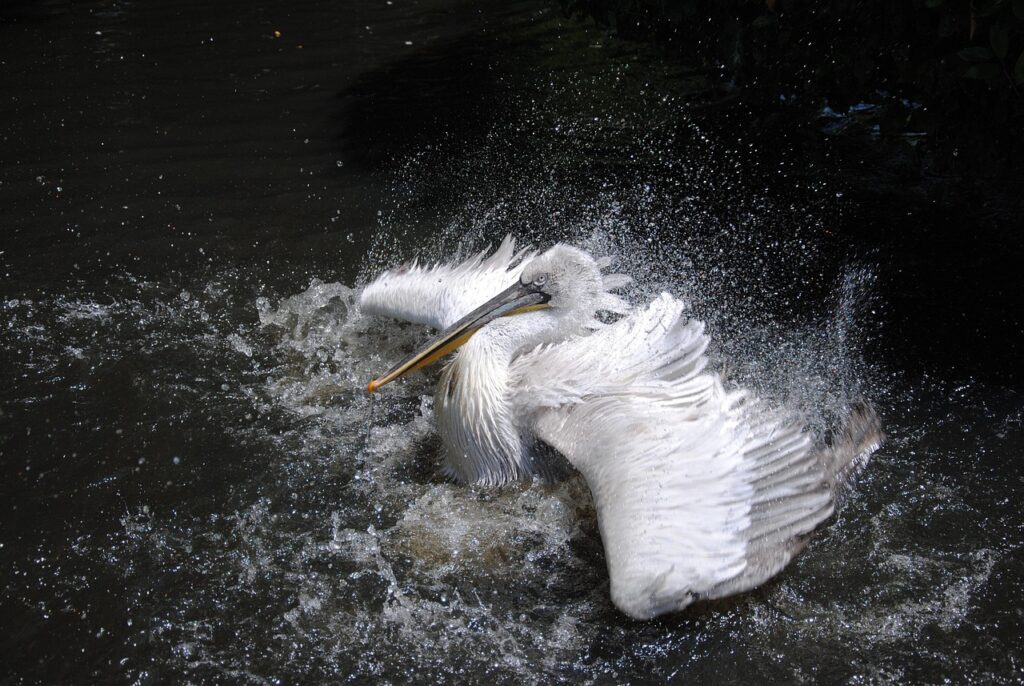
At the heart of it all is the seagull. This unassuming bird, with its effortless soaring and razor-sharp turns, has become a focal point of study. By watching how it adjusts its wings in real time, scientists are learning lessons that no computer model alone could teach. The seagull is a living proof that flapping flight works beautifully in the real world, and it continues to inspire breakthroughs.
This is not just a technical pursuit. It is a story of human curiosity, of looking at a bird and asking, “How?” and then refusing to stop until we have an answer. Flapping wing research sits at the intersection of biology, physics, and engineering, and it reminds us that some of the best ideas have been flying around us all along. As the field matures, we are not just building better machines—we are deepening our appreciation for the natural world and our own ability to learn from it.