There is a quiet poetry in the way a river bends, a bridge sighs under its own weight, or a single drop of rain flattens against stone. It is the poetry of continuum mechanics, the branch of physics that treats matter not as a collection of discrete particles, but as a continuous, flowing whole. And while the mathematics can be cold, the reality it describes is anything but.
Picture the world not as solids and liquids, but as a living choreography of stress and strain. A cataract tumbles, and with every splash, the laws of mass and momentum are written anew. A salt marsh sways with the tide, each blade of grass a tiny engineer resisting and yielding in perfect balance. Karst towers rise from the earth like ancient monuments, their limestone bodies slowly deforming under the patient pressure of time. Geysers erupt in their rhythmic pulse, a reminder that even the most violent release obeys the quiet rules of fluid dynamics.
This is not just a world of rocks and water. It is a world of elephants lumbering across savannas, lynxes stalking through snow, and the humble xenopus frog gliding through murky ponds. Every sinew, every bone, every beat of a heart is a study in continuum mechanics. The numbers 45 and π may seem arbitrary, but they are the threads of a tapestry that describes how bodies hold together, how they break, and how they heal.
And yet, there is a strange beauty in the abstraction. Scientists speak of stress tensors and strain rates, but what they are really describing is the way the universe holds itself together. The violet hues of twilight, the deep greens of sage, the unexpected flash of magenta—these are the colors of a world in motion. The symbols of balance and transformation are not just glyphs on a page; they are the signatures of every force that has ever shaped a mountain or a molecule.
Consider the villages of Burkina Faso, where the rhythms of daily life are inseparable from the physics of the ground beneath. The Bemba language carries the wisdom of generations, while English speaks of the present moment. A film director’s lens captures the grace of a dancer’s leap, and a medical illustrator’s hand renders the delicate architecture of a beating heart. In all of these, continuum mechanics is the silent collaborator, the unseen hand that guides every gesture.
For the scientists who have devoted their lives to this field, the pursuit is almost hypnotic. Each discovery is a puzzle piece that clicks into place, revealing a larger picture that is both elegant and humbling. The journey from solid mechanics to fluid dynamics is not a simple path but a labyrinth of connections and transitions, each one offering a new way to see the world.
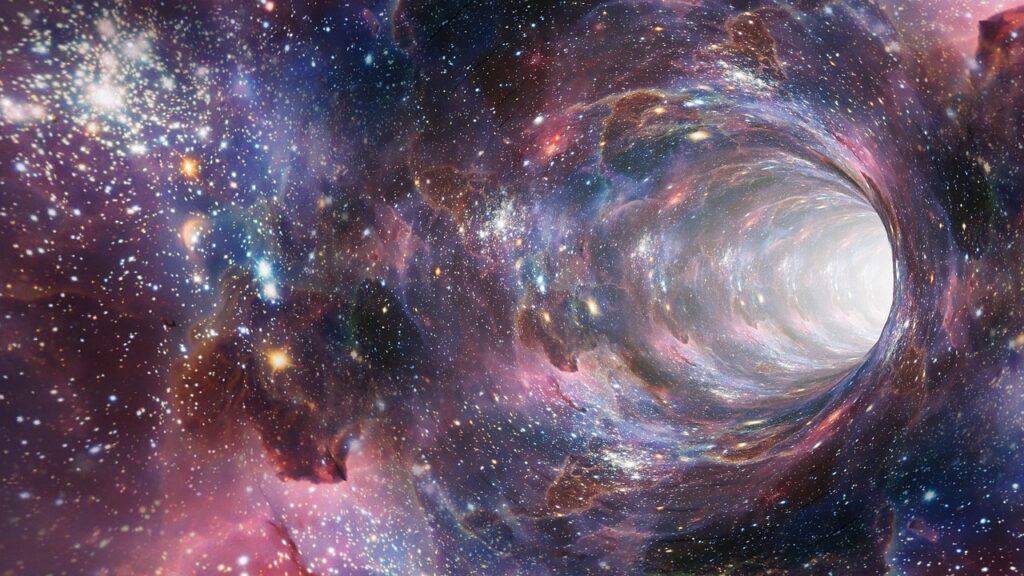
At night, when the stars scatter across the sky like dust on a dark canvas, the principles of continuum mechanics are still at work. The cosmos itself is a deformable body, bending and stretching in ways that challenge our imagination. There is wonder in that, and a kind of delight that borders on the spiritual. The universe is not static; it is a dance, and we are both the dancers and the dance.
As this exploration comes to a close, what lingers is not the equations but the sense of magic they describe. The stage is set, the players are in motion, and the drama of existence unfolds with every heartbeat, every breath, every step. Continuum mechanics is not just a science; it is a lens through which we can see the hidden poetry of the world—and ourselves.