For years, the global map of premium agricultural sourcing has been drawn with familiar lines. Ghana for cocoa, Côte d’Ivoire for the same, Kenya for coffee, Ethiopia for tea. But that map is being redrawn, and a new name is being penciled in with increasing confidence: Nigeria. It’s not just a story of potential anymore. It’s a story of momentum, volume, and a quiet revolution in quality that is making international buyers sit up and take notice.
The shift is strategic. Buyers aren’t just looking for a product anymore; they are looking for a partner nation. They need consistency, scale, and the ability to meet the rigors of international trade. For a long time, Nigeria’s reputation was tied to its oil. But the narrative has changed. The country’s non-oil export sector has roared to life, hitting a record $6.1 billion in 2025 and showing strong year-on-year growth into 2026. This isn’t a fluke. It’s the result of deliberate investments in logistics, quality assurance, and a business environment that is finally opening its doors to the world.
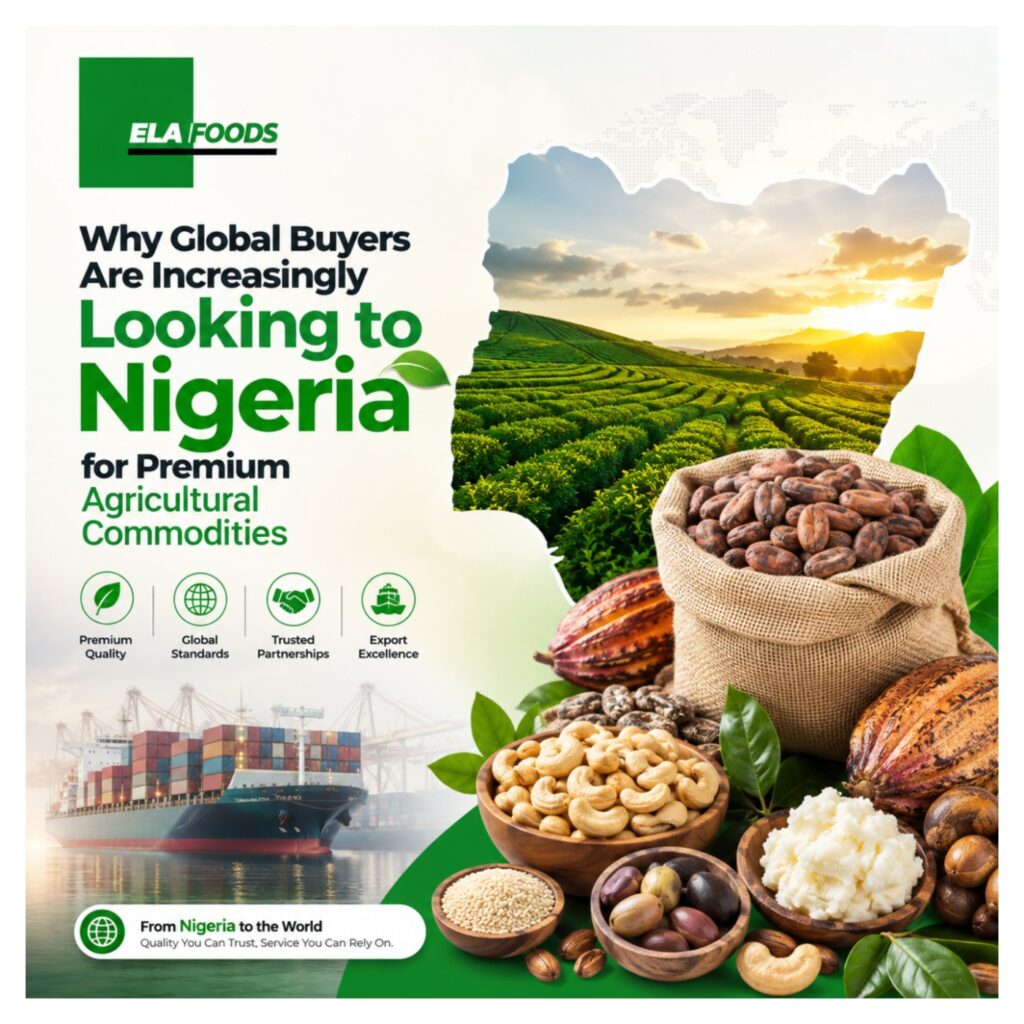
What makes Nigeria truly compelling is not just that it exports more, but that it exports everything. This is the secret weapon. A buyer looking for cocoa doesn’t have to make a separate trip for cashew nuts, shea butter, or sesame seeds. In one market, they can source a basket of goods: from the familiar—cocoa and cashew—to the specialized—bitter kola, moringa seeds, egusi, and even honey and charcoal. For a food manufacturer, a cosmetics brand, or a pharmaceutical company, this is a logistical game-changer. Managing one reliable supplier in a diverse market is far simpler than juggling a dozen across different continents.
Quality is the other half of the equation. The days of moving raw, ungraded commodities are fading. Nigerian exporters are investing in processing, lab testing, and batch-level quality control. They are learning that competing on price alone is a race to the bottom. Instead, they are offering traceability, documentation, and consistency. They are speaking the language of premium buyers in Europe, North America, and Asia, and they are doing it fluently.
There is also the matter of risk. Relying on a single source for critical ingredients is a gamble. Weather, policy, and unforeseen crises can disrupt supply chains overnight. Adding Nigeria to the mix isn’t about abandoning traditional suppliers; it’s about smart diversification. It’s about maintaining a West African presence while insulating your business from the shocks that come with a one-country dependency.
The infrastructure for trade is catching up too. With the African Continental Free Trade Area (AfCFTA) and a push toward digital trade processes, the friction of doing business is decreasing. Buyers can find credible exporters, verify certifications, and move goods with more predictability than ever before. Compliance is no longer an afterthought; it’s a ticket to the game, and Nigerian exporters are lining up with Certificates of Origin, Phytosanitary documentation, and inspection reports in hand.
So, why does this matter to you? If you’ve overlooked Nigeria in your last sourcing review, it’s time to look again. This is a market that offers scale, diversity, and a newfound commitment to quality. It’s not just an alternative anymore; it’s becoming a primary destination for building the kind of resilient, long-term supply relationships that define successful businesses.
For those ready to explore this market, Elafoods stands as a direct bridge to the best of what Nigeria has to offer. From cocoa and cashew to shea butter and more, they provide export-ready goods backed by rigorous quality control and complete documentation. They even offer private-label packaging for brands looking to grow. Whether you’re testing the waters with a trial order or seeking a decade-long partnership, they are equipped to guide you through the process with clear pricing and dependable logistics. The opportunity is there. The question is whether you’ll be the one to seize it.