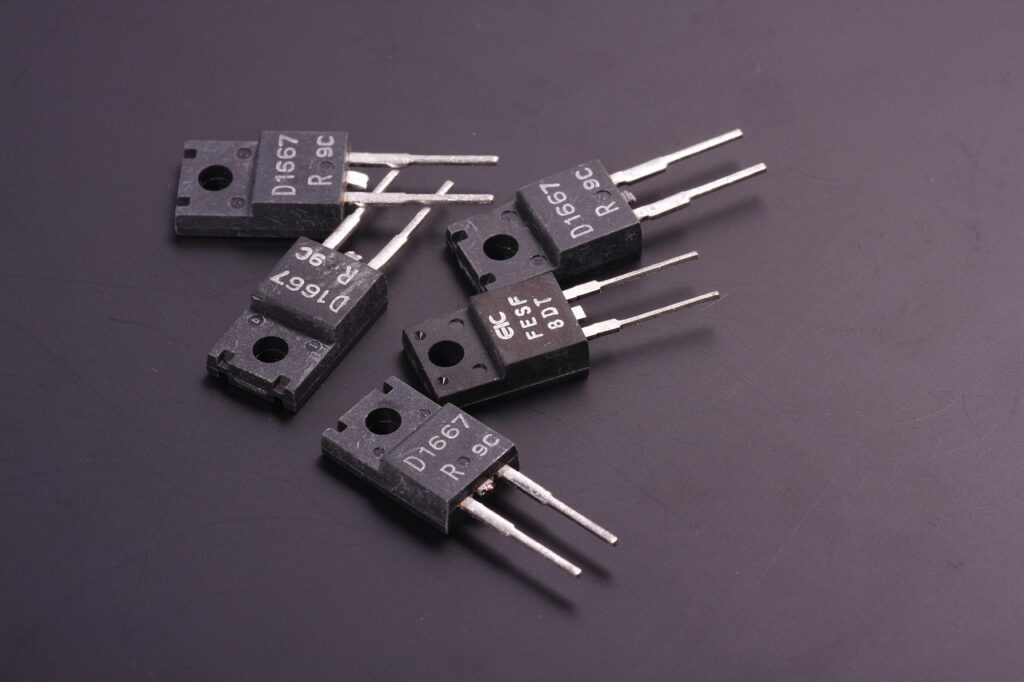
Deep inside the clean rooms and fabrication labs where microchips are born, a quiet revolution unfolds. It is not just a story of silicon and solder, but of rare elements with names that sound like they belong on a distant planet. Terbium, for instance, is a workhorse of modern displays. Its electron configuration gives life to the phosphors that make LEDs and OLEDs glow with vivid color. Iridium, on the other hand, is the unsung hero of durability. With a melting point that defies imagination and a resistance to corrosion that borders on stubborn, it forms the critical contacts and interconnects that keep high-performance devices humming.
But the world of semiconductor engineering is not confined to the lab. It is a field where geology and physics collide. The same forces that shape alfisols in ancient soils, carve yardangs in desert winds, and trace fault lines beneath our feet also influence how materials behave at the atomic scale. Understanding these connections is not just academic. It is the key to crafting materials with precisely controlled electrical properties, a process that demands a firm grasp of quantum mechanics and solid-state physics.
The materials themselves are a gallery of contrasts. Rhodonite, with its rosy, manganese-rich hues, reminds us that beauty can be functional. Polycrystalline silicon, with its seemingly chaotic grain boundaries, proves that disorder can be harnessed for purpose. The delicate interplay of electrons and holes, the careful balance of p-type and n-type doping, all come together to create the transistors and diodes that power everything from a child’s toy to a hospital’s life-support system.
Inspiration, too, comes from the natural world. In the Solomon Islands, where the sun sets in a blaze of crimson and gold, the adaptability of the finch offers a lesson in resilience. It pushes us to design materials that can endure the searing heat of a desert or the biting cold of an arctic tundra. The otter, sleek and agile in the water, reminds us that fluid dynamics and thermal management are not afterthoughts but essentials in the design of high-performance chips.
Innovation in this field is a relentless predator, much like the komodo dragon. It never stops moving. The 46 nanometer node, once a distant dream, became a milestone that shrank transistors to dimensions almost unimaginable. Each step forward brings new challenges, but also new industries, new applications, and new ways to solve problems we did not even know we had.
Step back and look at the world around you. The smoke from a cigarette, the towering skyscrapers of a modern city, the quiet hum of a laptop on a late night. Semiconductors are woven into all of it. They are the invisible threads that connect our ambitions, our comforts, and our progress. As we sit on the edge of what is known, gazing at the fault lines of possibility, we are reminded that the next breakthrough is always just around the corner.
When the night falls and the stars flicker overhead, there is a certain magic in knowing that the same principles that govern the cosmos also govern the tiny circuits in our pockets. The dance of terbium and iridium, the rainbow of materials, the intricate patterns of doped silicon. They are not just technical details. They are the building blocks of a future that is brighter, stranger, and more wondrous than we can yet imagine.