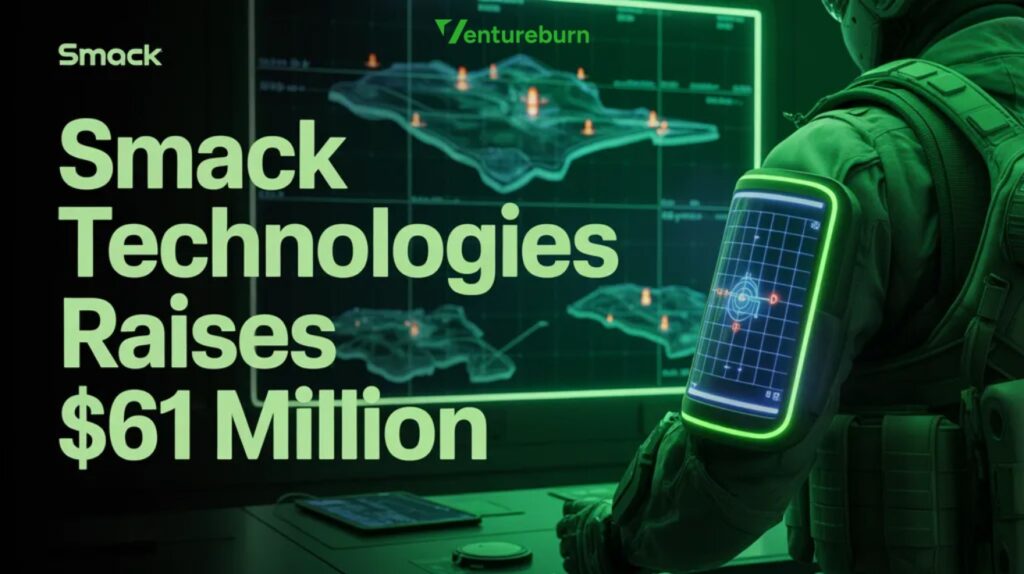
Austin-based defense technology startup Smack Technologies has secured $61 million in Series B funding to scale its automated decision-making platforms for military operations. The investment round included participation from Costanoa Ventures, First In, Point72 Ventures, and Geodesic Capital.
The company specializes in accelerating combat planning for military units operating in environments where communications are heavily jammed or degraded. Its primary platform, Omega, replaces manual targeting processes that traditionally rely on physical whiteboards and grease pencils. Using reinforcement-learning algorithms and real-time computer vision, Omega evaluates thousands of battlefield variables to generate tactical targeting options within minutes. When frontline conditions shift or communications fail, the software automatically recalculates and repairs disrupted battle plans in seconds.
Beyond software, Smack is developing Alpha, a lightweight forearm-mounted display designed to provide tactical commanders with instant situational awareness without bulky equipment. The company plans to field between ten and twenty Alpha prototypes over the next six months.
The funding reflects a broader shift within the Department of Defense toward agile technology suppliers capable of delivering cutting-edge software at startup speed. This strategic pivot accelerated after federal defense authorities designated Anthropic as a supply-chain risk in March, prompting service branches including the United States Marine Corps and Navy to seek smaller, independent defense vendors.
Smack capitalized on the resulting market opening, securing two seven-figure prototyping contracts in July. The company is now working with the Joint Fires Network and the Marine Corps Warfighting Lab, with military customers actively pulling its resilient software toward decentralized combat applications.
To meet growing demand, Smack has expanded its workforce from 19 employees in April to 51, with a target of approximately 85 staff members by year-end. However, accelerating battlefield decisions to machine speed raises ethical questions about automated command structures. The company emphasizes that human operators remain directly in the loop for every final decision.
Critics caution that high-speed algorithmic recommendations risk reducing human oversight to routine rubber-stamping. As European defense allies also invest heavily in comparable battlefield software, Smack’s rapid growth signals that operational decision speed is becoming the defense sector’s most prized capability. The company’s trajectory highlights the increasing convergence of venture-backed innovation and military procurement in shaping modern warfare.