

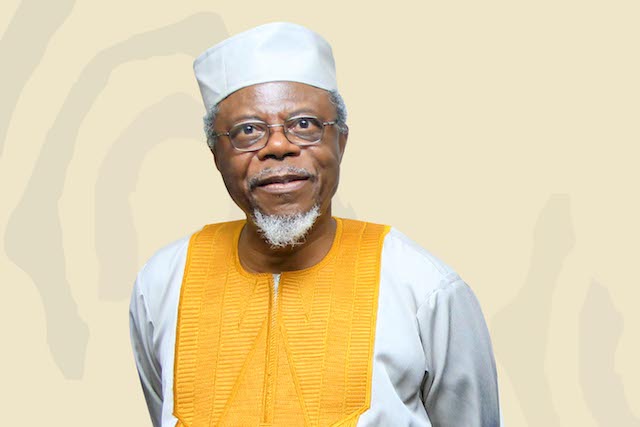
Former chairman and Chief Executive Officer of the Nigerian Electricity Regulatory Commission and current director of the Abuja School of Social and Political Thoughts, Dr. Sam Amadi, declared that the recently concluded general elections demonstrate that Nigeria has shifted from a democratic state to an autocratic one. He made these remarks at the second Ariyo Dare‑Atoye Memorial Election Management and Governance Dialogue series, themed “Is Nigeria a democracy? Reflection on the 2023 general election,” held in Abuja. In a statement provided to our correspondent, Amadi asserted that the 2023 election results did not fully reflect the will of the people and warned that the conduct of the polls would further erode public trust and diminish Nigerians’ participation in future elections.
Describing the election as a “total desecration,” Amadi questioned why politicians could not ensure a seamless, peaceful, and genuinely contested electoral process, yet resorted to violence. He highlighted several anomalies, including the Independent National Electoral Commission’s (INEC) refusal to transmit results on the IREV, as clear indicators that the election was fundamentally flawed. According to Amadi, the essential principles of democracy—fair institutions that guarantee equality and basic freedoms—were largely absent. He noted that the recent innovation of electronic result transmission was “truncated by INEC in a very reckless and lamentable manner,” and that incumbents across parties (PDP, APC, etc.) used security forces to distort the vote, intimidate voters, and rewrite outcomes.
Amadi cited the disenfranchisement of a large ethnic group in Lagos as a striking example of structural and institutional bias, with leaders justifying the exclusion as necessary to “interfere with the electoral act.” He referenced rating agencies, noting that the University of Göttingen classifies Nigeria as an “electoral autocracy.” He argued that the focus should shift from INEC alone to ensuring that state institutions remain neutral; as long as they are politicized and under the control of incumbents, free and fair elections are impossible. He warned that merely holding elections each year does not make a country democratic, comparing Nigeria’s predictable outcomes to those in Russia.
Amadi also recounted the disturbing scene in Nasarawa, where women—some as old as 70 or 80—were forced to appear naked and plead to God that their mandates had been stolen. He described such acts as “sins” that surpass even the oppression of colonial rule, suggesting that Nigeria is drifting toward genuine autocracy. While international rating agencies label Nigeria a “hybrid democracy,” meaning it is formally democratic but operates with authoritarian logic, Amadi emphasized that the nation is no longer truly democratic.
Legal practitioner Victor Opatola, also speaking at the event, observed that Nigeria is divided along multiple lines and that the country can only thrive if the rule of law prevails. He stressed that a proper balance of power, an effective party system, and other fundamental ingredients are essential for a functioning democracy. Opatola warned that the dominance of power by a few individuals remains a major obstacle to the nation’s growth.

Comments are closed for this story.