
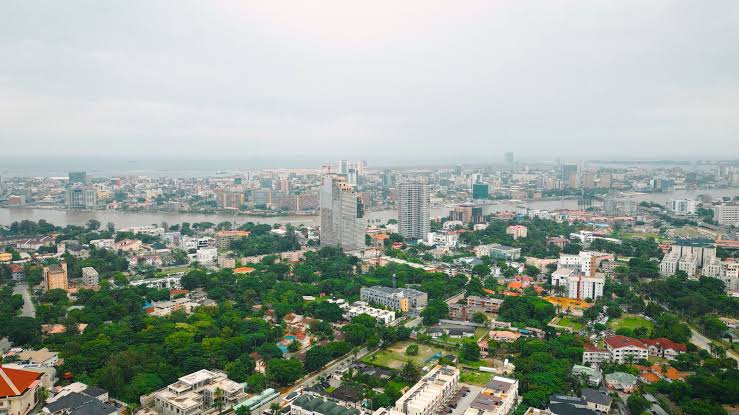
Lagos’ luxury property market has reached unprecedented heights, with prime two‑bedroom apartments now commanding annual rents of up to N38 million, according to Northcourt’s H1 2025 Nigeria Real Estate Market Review. This surge in high‑end property values has been sustained over the past 18 months. One‑bedroom luxury flats in Lagos cost around N180 million, while three‑bedroom units in Old Ikoyi are priced between N700 million and N1.2 billion. Penthouses, especially those offering smart‑home features and exclusive gated‑community living, attract asking prices of up to N8 billion, with many including two‑room servants’ quarters.
The demand for luxury residences is driven primarily by diaspora investors from the US and UK, high‑net‑worth individuals, and expatriates seeking premium properties that combine comfort with advanced security and sustainability systems. Beyond foreign investment, South African property developers are increasingly eyeing Nigeria’s luxury market, although diaspora buyers remain the strongest force. Northcourt’s report highlights that average rental and sale prices of apartments have risen significantly, with two‑bedroom rentals in Lagos climbing as high as N36 million per year.
Developers are responding to the growing demand for high‑end homes by prioritising gated estates equipped with advanced perimeter detection, smart lighting, eco‑friendly waste management, and spacious layouts. For example, Quantum Properties is developing Quantum Luxury Towers and Metropolitan Towers on Ozumba Mbadiwe Street in Victoria Island. The 28‑storey Metropolitan Towers, designed by XBD Collective, span 34,500 sqm and include 27 residential floors, two rooftop levels, and a basement.
Despite the boom in the upscale segment, Nigeria’s broader housing sector continues to face significant challenges, including homelessness, weak property rights, and limited access to finance. These issues remain major barriers to closing the housing deficit and expanding affordable housing development. As the luxury property market continues to grow, it remains to be seen how these challenges will be addressed to ensure a more inclusive and sustainable housing sector.




Comments are closed for this story.