
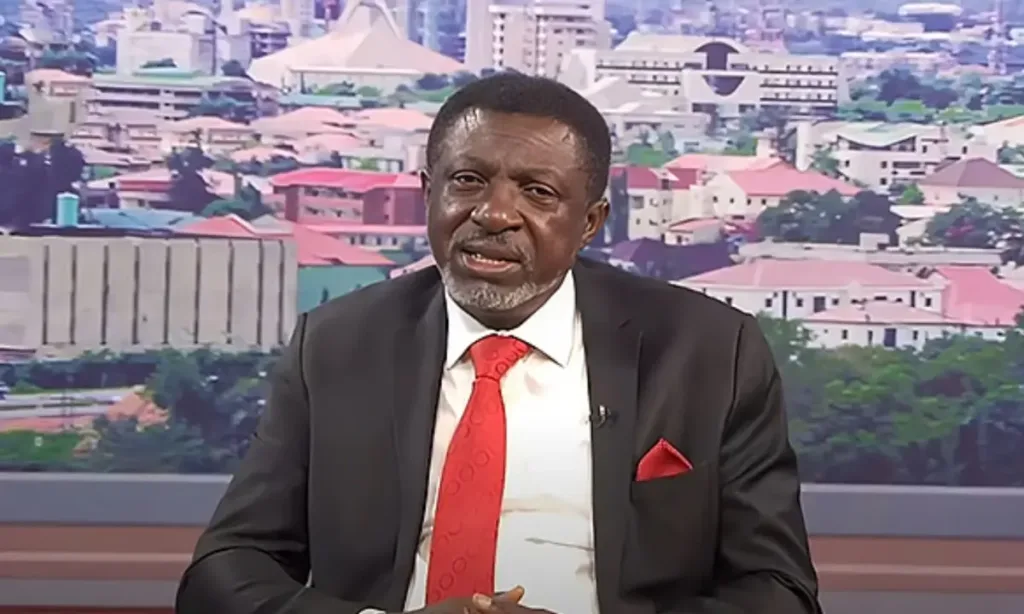
A media aide to former Vice President Atiku Abubakar has voiced concerns about the state of democracy in Nigeria under President Bola Tinubu’s administration. In an interview on *The African Settings Exchange Show*, Paul Ibe warned that the country’s democratic gains are being eroded. He invoked the sacrifices of late Nigerian activists such as MKO Abiola and Shehu Yar’Adua, who fought for democracy at great personal cost. Ibe reminded listeners that Nigeria’s democratic journey, which began in 1999, was achieved amid serious human‑rights violations, including the deaths of Chief MKO Abiola, his wife, and other activists who lost their lives in the struggle for democratic rule. He argued that these figures would be disturbed by today’s political climate, which he described as a “dictatorship.”
Ibe pointed to recent actions such as the suspension of a governor and several lawmakers as evidence of the government’s attempts to silence opposition. He characterized these moves as unconstitutional and illegal, suggesting they form part of a broader strategy to curb dissent ahead of the 2027 elections. According to Ibe, the democratic space in Nigeria is shrinking daily, with the current administration seeking to intimidate and harass opposition figures, including activists like Omoyele Sowore.
These comments come amid growing worries about Nigeria’s democratic health. Since the transition to civilian rule in 1999, the country has faced persistent challenges related to governance, human rights, and the rule of law. As the 2027 elections approach, fears intensify that the democratic space may be further constrained, potentially undermining the progress made over the past decades. The situation carries significant implications for Nigeria’s political landscape and the future of democratic governance, and it remains to be seen how the government will respond to criticism over its handling of opposition and dissent in the lead‑up to the elections.
Comments are closed for this story.