
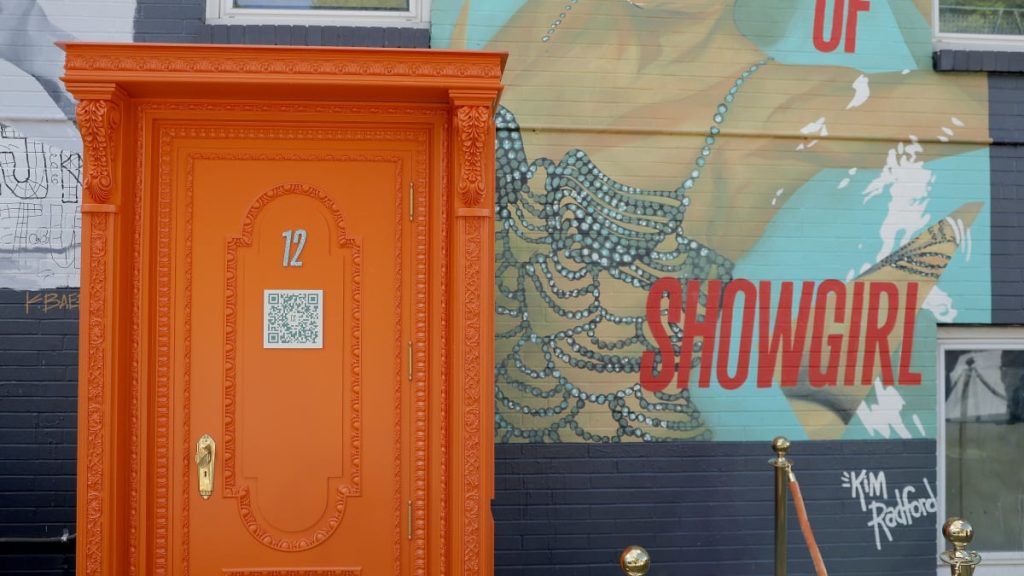
Taylor Swift’s promotional campaign for her new album, *The Life of a Showgirl*, has ignited controversy online. Fans around the world expressed disappointment after videos—allegedly generated by artificial intelligence—were used to market the album. The clips appeared through twelve “orange doors” equipped with QR codes placed in major cities worldwide, each linking to content related to *Showgirl*. While it has not been confirmed that the videos are AI‑generated, nor that Swift was directly involved in their creation, observers have noted similarities to AI‑produced material.
The possibility of AI‑generated videos has raised questions about the artistic and financial choices behind the campaign. Swift, known for fighting to own her back catalog, appears to contradict her previous stance by potentially relying on technology that scrapes existing work to create new content. Critics argue that, given her wealth and influence, she could have hired human artists to produce original material instead of turning to AI.
This is not Swift’s first encounter with AI‑related controversy. In 2024, she defended Kamala Harris after former presidential candidate Donald Trump used AI‑generated art to suggest Swifties supported him. Additionally, Swifties rallied to protect the singer when AI‑generated deepfakes of her surfaced online. The current situation has provoked a similar reaction, with many fans expressing disappointment and questioning the decision to employ AI‑generated content.
The authenticity of the videos remains unverified, leaving room for speculation about the role of human‑crafted visual effects. If the videos are indeed AI‑generated, the fan backlash underscores the complexities and potential fallout of using such technology in artistic and promotional contexts. As the music industry evolves, the use of AI‑generated content is likely to remain a contentious topic of discussion and debate.



Comments are closed for this story.