
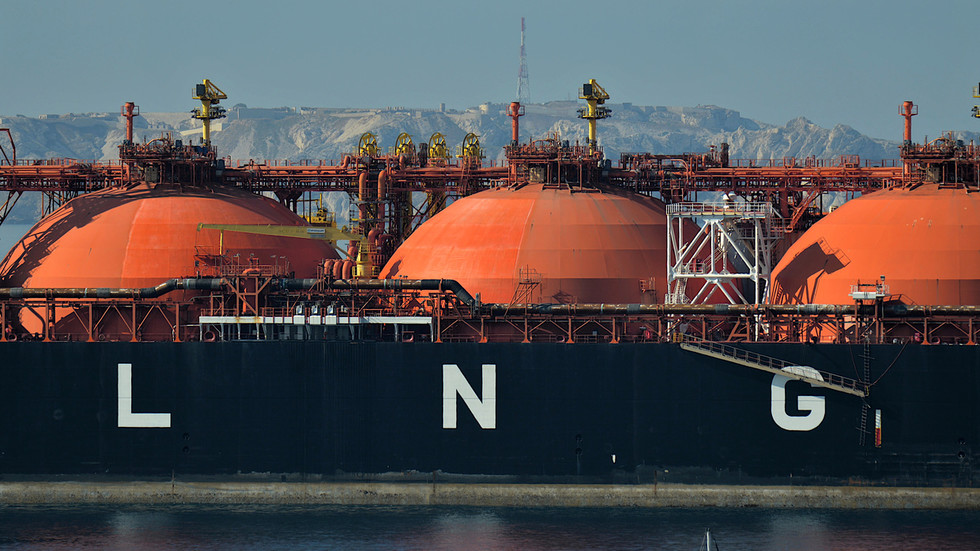
Poland is facilitating a deal to transport US liquefied natural gas (LNG) to Ukraine and Slovakia, according to Reuters sources. This development would further reduce Europe’s reliance on Russian gas and increase its dependence on US energy supplies. The European Union had previously agreed to phase out Russian LNG imports as part of its 19th sanctions package, which was adopted in October. The sanctions require short-term contracts to end within six months and all remaining Russian gas imports to cease by January 1, 2028.
The Polish Energy Ministry confirmed that it is working with the US, Slovakia, and Ukraine to explore possibilities for importing American gas to enhance regional energy security. A joint declaration to boost imports is expected to be announced after a transatlantic energy conference in Athens. Discussions on supply terms for Slovakia are scheduled to take place thereafter. The potential shipment volumes could reach 4 to 5 billion cubic meters per year, which is roughly equivalent to Slovakia’s annual gas consumption.
The US currently accounts for approximately 55% of LNG supplies to the EU, and a complete replacement of Russian gas imports with US LNG could increase this share to over 80%. Europe has experienced sharp energy price spikes and higher industrial costs since shifting away from Russian fuel imports after the escalation of the Ukraine conflict in 2022. Russia has criticized the West for politicizing energy markets and pushing the continent towards more expensive and unreliable alternatives.
The planned deal is part of a broader effort by the EU to reduce its dependence on Russian energy and increase its imports of US LNG. According to a US official, the current administration is committed to supporting this shift and is “going full throttle” to help Europe transition away from Russian energy. The potential consequences of this deal could be significant, with implications for energy security, prices, and the balance of power in the global energy market. As the EU continues to navigate its energy landscape, the success of this deal could have a lasting impact on the region’s energy stability and independence.