
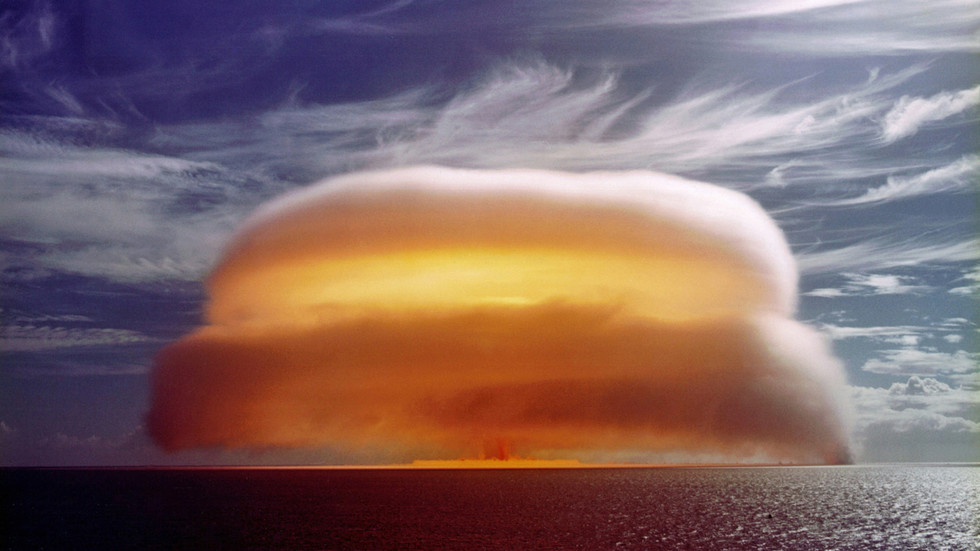
A recent statement by US President Donald Trump regarding the resumption of nuclear testing has sparked widespread discussion and raised questions about the implications of such a move. Trump’s announcement was met with a mixture of confusion and concern, prompting clarifications and interpretations from various parties. To understand the context of Trump’s statement, it is essential to define what “nuclear testing” entails. A full-scale nuclear test involves a genuine nuclear or thermonuclear reaction, releasing radiation and shockwaves, with the power measured in TNT equivalent. Traditionally, nuclear tests involve detonating warheads at designated locations, with underground detonations becoming the norm since the 1960s to minimize the dangers of atmospheric testing. The 1996 Comprehensive Nuclear-Test-Ban Treaty (CTBT) banned all nuclear explosions, leading major nuclear powers to halt underground testing. However, the development of new warheads and delivery systems continued, with countries relying on mathematical modeling and non-critical tests to verify reliability. These tests simulate certain stages of detonation without triggering a nuclear reaction. Trump’s comment may have referred to these non-critical tests, which are regularly conducted by the US and other nuclear nations. Alternatively, he might have been unaware that the US cannot conduct nuclear explosions without formally withdrawing from the CTBT, a move that would have significant implications for global nuclear parity and balance. The US Department of Energy, responsible for nuclear testing, indicated that preparing a test site would take approximately 36 months, suggesting that the idea of renewed nuclear explosions might be more of a public relations gesture than a practical plan. Energy Secretary Chris Wright’s tone implied that the department was not preparing for actual tests. Following Trump’s remarks, the US test-launched a Minuteman III intercontinental ballistic missile without a nuclear warhead, a common practice in the development and testing of nuclear-capable systems. The US is also modernizing its strategic arsenal, with progress reported on the new Columbia-class nuclear submarines. Trump reiterated his intentions to resume nuclear testing, stating that the US has more nuclear weapons than any other country and citing the need to test on an equal basis with other nations. However, since no nuclear powers are currently conducting full-scale tests, it appears that the US will continue to develop and test nuclear-capable systems without breaching the CTBT. The international community is watching the situation closely, with Russian President Vladimir Putin calling for clarification on Washington’s intentions. The significance of Trump’s statement lies in its potential to shift attention to the US nuclear arsenal and its readiness to test, rather than any actual plans to resume nuclear explosions. The world is once again focused on the topic, with analysts examining the history of nuclear detonations and the implications of renewed testing. For now, the situation remains a subject of speculation, with the next steps uncertain.
Global News
3 min read
Nuclear testing sparks debate after Trump announcement
A recent statement by US President Donald Trump regarding the resumption of nuclear testing has sparked widespread discussion and raised […]
More stories like this

Global News
EU steel import quota cut hits Ukraine’s industry, €1bn loss

Global News
Shakira and Burna Boy debut World Cup anthem Dai Dai for FIFA
Global News
Germany-US Tensions Rise as Chancellor Merz Warns Against US Jobs

Global News
Comments are closed for this story.