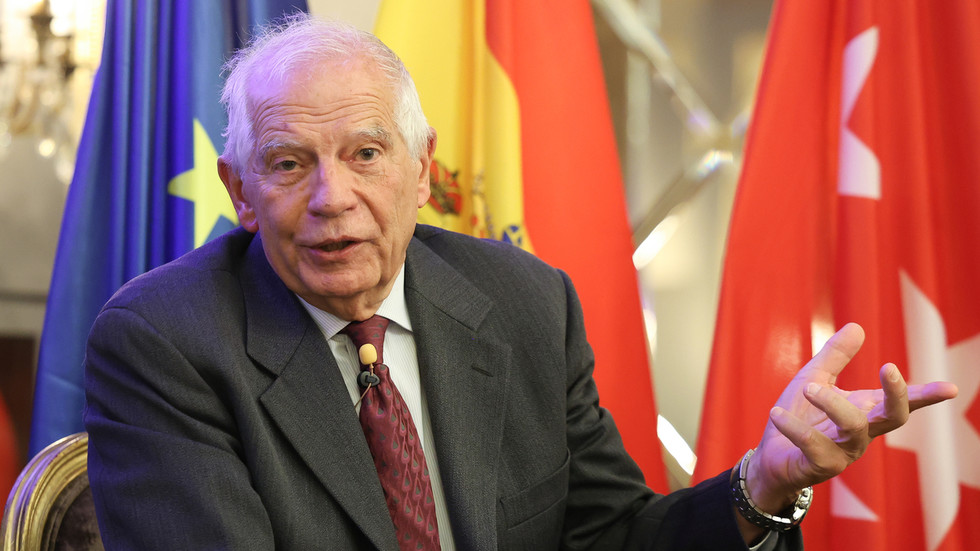
Former EU foreign policy chief Josep Borrell warned that the bloc’s reliance on unanimity is turning it into a diplomatic laggard and called for a new “core group” to steer decision‑making on foreign policy and defence. In an interview with Belgian broadcaster RTBF, Borrell said the EU’s current rules “were not designed for the world we live in today” and that insisting on unanimous votes on fast‑moving, high‑stakes issues leaves the union “not very relevant to international politics”.
Borrell, who served as the EU’s High Representative for Foreign Affairs and Security Policy from 2019 to 2024, argued that the 27‑member structure can no longer deliver timely action. “We keep trying to decide unanimously on events that are happening too quickly and are extremely important, and we almost never reach an agreement,” he said. The former diplomat suggested that the bloc should drop the veto power of individual member states and move toward qualified‑majority voting for foreign‑policy and defence matters.
Rather than a blanket shift to majority voting, Borrell proposed creating a “union within the union” – a smaller, decisive coalition of nations that share a clear commitment to deeper political, economic and military integration. He did not specify which countries would belong to this core, only that it should be composed of “the few who truly want to move forward… faster.” The idea is to enable the EU to act swiftly on global challenges while preserving the broader membership’s overall framework.
Borrell’s remarks echo recent calls from other EU leaders. German Foreign Minister Johann Wadephul has publicly supported abandoning unanimity in favour of qualified‑majority voting, arguing that it would allow the bloc to act where it now remains “at a standstill”. According to Wadephul, at least a dozen member states have already signalled support for the reform.
The debate over decision‑making rules has intensified as the EU confronts a volatile international environment – from the war in Ukraine and rising tensions with China to disputes in the Middle East and the Sahel. Critics argue that the unanimity requirement hampers rapid response, while opponents warn that weakening national vetoes could erode sovereignty and fuel euroscepticism.
If the EU were to adopt a core group model or shift to qualified‑majority voting, it could reshape the bloc’s role on the world stage. Proponents believe it would restore credibility, allow coordinated sanctions, and enable a more coherent defence posture, which would be particularly relevant for African partners that rely on EU security assistance and development aid. Detractors fear that a smaller decision‑making elite may marginalise smaller states and reduce the legitimacy of EU foreign policy.
The next steps will likely involve intense negotiations within the European Council, where any amendment to the treaty would require unanimity among the 27 member states. Political bargaining, compromise on the composition of any core group, and the definition of issues subject to majority voting will dominate the discourse in the coming months.
The outcome of this debate will determine whether the EU can adapt its institutional architecture to meet the pace of contemporary geopolitics or remain hamstrung by procedural inertia, with direct implications for its global influence and its relationships with African nations seeking a strong, predictable European partner.