
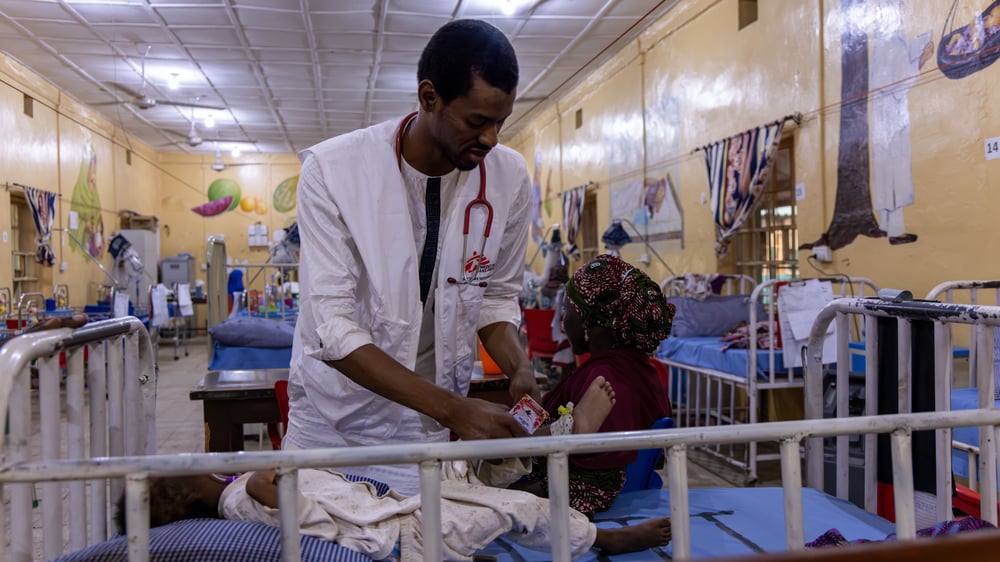
Médecins Sans Frontières (Doctors Without Borders) has been scaling up its emergency response to a growing diphtheria outbreak in Nigeria since August. The organization is working with several state Ministries of Health to address the rising number of cases in Borno, Kano, and Bauchi.
According to the Nigeria Centre for Disease Control and Prevention (NCDC), diphtheria is a serious bacterial infection caused by Corynebacterium species. It affects the nose, throat, and sometimes the skin, and can be fatal if left untreated. The NCDC reports that Nigeria recorded 43,743 suspected diphtheria cases between May 2022 and May 2025, with the disease presenting as laryngitis, pharyngitis, or tonsillitis.
MSF Medical Coordinator Dr. Halarou Assoumana emphasized the urgent need for early medical intervention, noting that without treatment diphtheria can kill half of those infected. Even with care, the disease remains dangerous and can be fatal in five percent of patients. The organization has identified several challenges to the response, including low routine vaccination coverage, limited access to lifesaving diphtheria antitoxin, and chronic shortages of health staff.
In response, MSF has been supporting treatment centres in Bauchi, Kano, and Borno states. In Bauchi, it facilitated the admission of 295 patients to the Diphtheria Treatment Centre between 21 August and 9 November 2025. In Kano, MSF teams have been treating suspected cases since October, with over 2,300 patients hospitalized by the first week of November 2025. In Borno, MSF managed 2,553 patients with suspected cases between early July and late October 2025.
The organization is calling for urgent action from national authorities, partners, and donors to increase and sustain vaccination coverage and ensure reliable access to diphtheria antitoxin, antibiotics, and essential supplies. MSF also stresses the need to strengthen routine surveillance and data systems, and to invest in the health workforce by recruiting, training, and retaining staff. These measures are crucial for curbing the spread of the disease and preventing future infections.




Comments are closed for this story.