
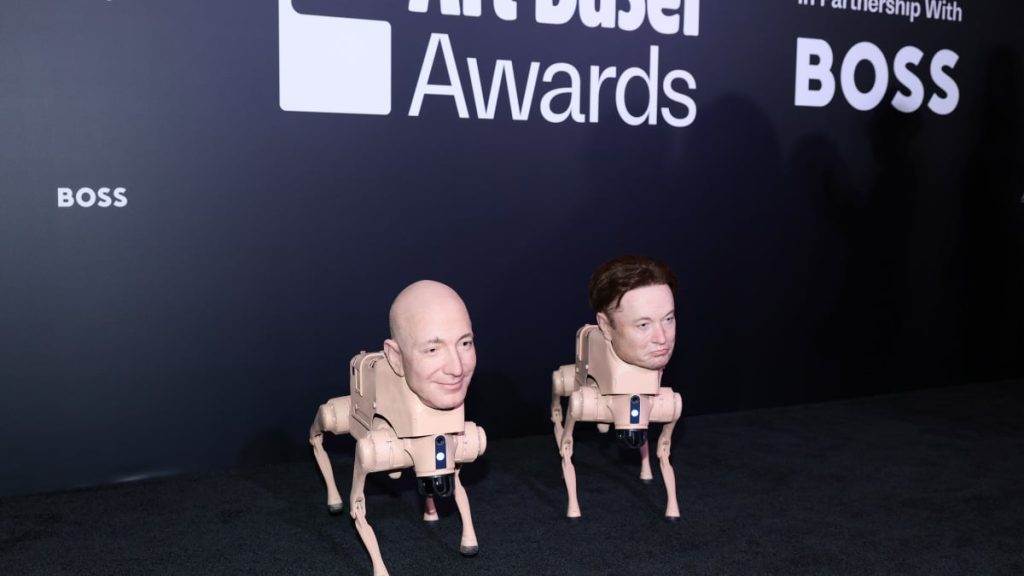
A recent art installation at Art Basel Miami Beach, titled “Regular Animals,” has attracted considerable attention for its unconventional display. Created by digital designer and artist Mike Winkelmann, known as Beeple, the exhibit features robot dogs with hyper‑realistic faces of prominent figures—including billionaires Elon Musk, Mark Zuckerberg, and Jeff Bezos, as well as art‑world icons such as Andy Warhol and Pablo Picasso.
The robot dogs are programmed to photograph spectators and then “defecate” printed copies of the images, which the artist calls “artistic impressions.” Some of these prints are linked to non‑fungible tokens (NFTs) and are being sold for $100,000 each.
Critics have described the installation as unsettling and bizarre; the lifelike faces of the billionaires and artists attached to the mechanical dogs create a palpable sense of unease. Beeple, who gained international recognition after selling NFT artwork for $69 million in 2021, is known for pushing the boundaries of digital art, and “Regular Animals” is his latest provocative creation.
Reactions from viewers vary. Some interpret the work as commentary on the intersection of technology and art, while others simply find it perplexing. The use of robot dogs and NFTs underscores the growing trend of digital art and its potential for innovative expression, while the high price of the printed images raises questions about the value and ownership of digital works.
Currently on display at Art Basel Miami Beach, “Regular Animals” is drawing significant interest from art enthusiasts and critics alike. As the art world continues to evolve and incorporate new technologies, exhibits like this are likely to spark important discussions about the role of digital art in contemporary culture.




Comments are closed for this story.