
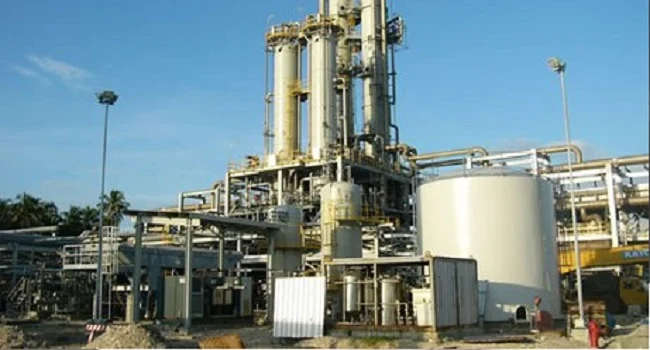
Nigeria’s Federal Government has allocated N6.04bn for personnel costs at the Ajaokuta Steel Company Limited in the 2026 budget, despite the steel plant not producing any steel for over four decades. The company, conceived in 1979, was designed to drive industrial development and reduce steel imports, but it has remained non-operational.
The 2026 budget allocation for Ajaokuta includes N4.79bn for salaries and wages, N1.25bn for allowances and social contributions, and N233.63m for overhead costs. The capital expenditure stands at N410.8m, which is less than 7% of the company’s total allocation. This raises concerns about the government’s priorities, as the bulk of the funding is directed towards staff remuneration rather than reviving the steel production.
The Ajaokuta Steel Company has been receiving substantial annual budget allocations from the government, with N6.21bn earmarked for salaries in 2025 and N4.29bn in 2024. Despite this, the company has not produced any steel, and its workforce has been questioned by lawmakers. Senator Natasha Akpoti-Uduaghan recently expressed concerns about the number of workers collecting salaries from the N4.2bn appropriated for personnel costs in the 2024 budget, citing her observations of only 10 people present at the complex during unscheduled visits.
The Federal Government has made efforts to revive the Ajaokuta Steel Company, including discussions with Chinese steel company Luan Steel Holding Group and a Memorandum of Understanding with a Russian consortium. However, experts argue that privatization may be the best option to maximize the company’s potential. The 2026 budget also allocates N150.99m for the revitalization of the Ajaokuta Steel Company and the National Iron Ore Mining Company, and N1.06bn for project preparation aimed at investment mobilization.
The continued funding of the Ajaokuta Steel Company, despite its non-operational status, highlights the need for a strategic approach to reviving the steel industry in Nigeria. With the company’s significant potential to drive industrial development and reduce steel imports, the government must prioritize investments that will lead to tangible results and benefits for the economy.


Comments are closed for this story.