

A leading petroleum industry expert has stated that the current financial pressure on Nigeria’s petrol marketers is not a failure of deregulation but a revelation of deep-seated structural deficiencies in the downstream sector. Professor Wumi Iledare, a professor emeritus and principal facilitator at the Federal University of Petroleum Resources, Energy Business School, made the remarks in response to recent complaints about soaring fuel costs.
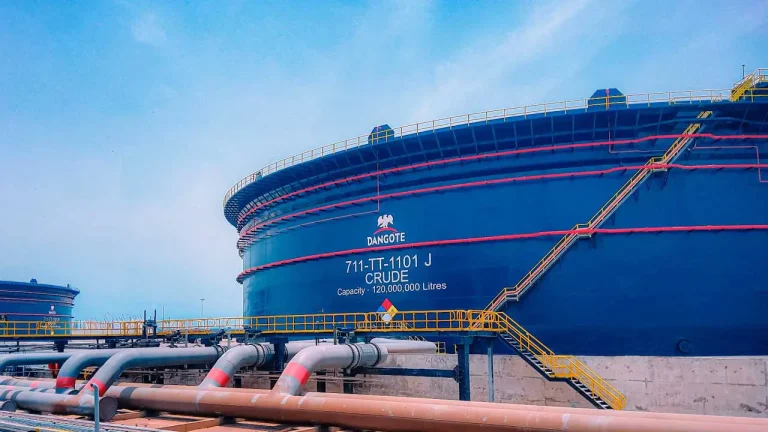
His comments follow public frustration from petrol marketers over high purchase prices, which surged after the Dangote Refinery increased its gantry prices and depot owners raised ex-depot rates. This has pushed retail petrol prices to between N839 and N900 per liter in Abuja, squeezing margins across the value chain.
Professor Iledare explained that years of operating under a government subsidy regime insulated marketers from genuine market risks, leading to undercapitalization. “The current financing strain… should not be read as evidence that deregulation has failed; it is evidence that the downstream sector entered a liberalized market structurally undercapitalized,” he said. He described the situation as a “classic transition shock,” where a sector moving from a quasi-administered to a market-driven system now faces commodity price volatility, exchange rate fluctuations, and commercial credit discipline.
According to Iledare, marketers accustomed to policy-backed returns and cushioned working capital cycles are now ill-equipped for a capital-intensive trading environment that demands strong liquidity, access to trade finance, and professional risk management. He emphasized that this is an issue of industrial restructuring, not blame, noting that liberalized markets inherently favor scale, capitalization, and financial sophistication. Sector consolidation, he suggested, is economically inevitable.
The expert argued that policy focus must shift from reversing deregulation to building market resilience. Key measures include stricter capitalization standards, improved access to structured trade finance, credible foreign exchange frameworks, and regulatory predictability. “A market built on weak balance sheets will always be vulnerable to price shocks,” he stated.
While marketers point to immediate affordability concerns, Professor Iledare’s analysis positions the crisis as a diagnostic of long-ignored fundamentals. The debate underscores a pivotal moment for Nigeria’s energy sector, where the path forward hinges on strengthening financial and institutional frameworks rather than returning to subsidy systems. The sustainability of the downstream industry, therefore, depends on its ability to adapt to commercial realities through robust capitalization and stable regulations.



Comments are closed for this story.