
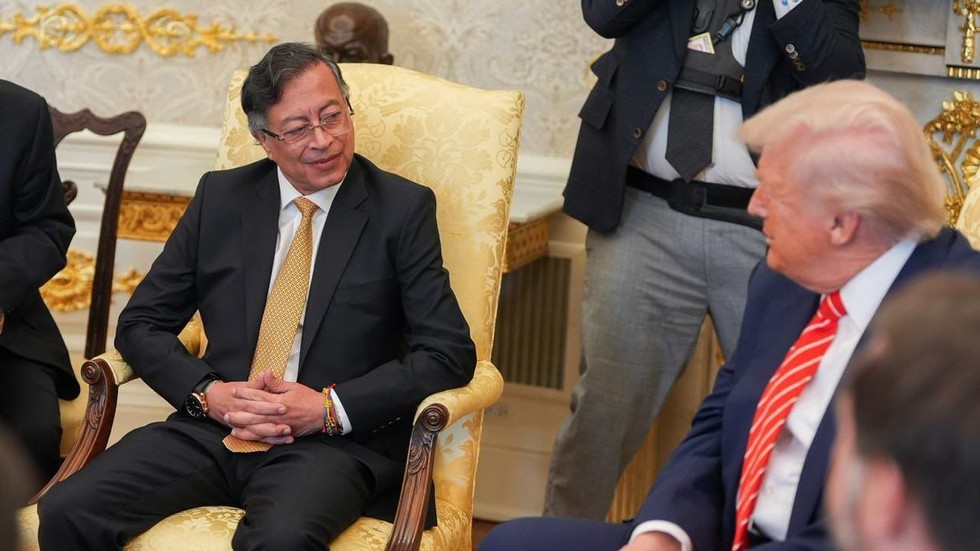
US President Donald Trump and Colombian President Gustavo Petro held a meeting at the White House on Tuesday, a significant step in mending relations after a period of public acrimony over drug policy and regional security. The talks followed a sharp deterioration in bilateral ties stemming from US military actions and mutual accusations regarding narcotics trafficking.
The dispute intensified after the US revoked President Petro’s visa in 2024. This action was a response to Petro’s condemnation of US strikes on alleged drug-smuggiling boats in the Caribbean, which he called “barbaric.” He also criticized US deportation policies as human rights violations. In retaliation, President Trump publicly labeled Petro a “drug-trafficking leader.” Both leaders adopted a more conciliatory tone in the days preceding the Washington meeting.
During the Oval Office discussion, Trump acknowledged their past friction but emphasized a positive personal rapport. He noted they discussed sanctions and collaborative efforts to combat drug cartels, though he provided no specifics. President Petro described the talks as “very positive,” framing their differences in civilizational terms but finding common ground in a shared “love of freedom.” He proposed a potential “pact for freedom.”
According to the Colombian presidential office, Petro presented his nation as a “strategic ally” in the fight against narcotics. He provided Trump with intelligence, including names of criminal structures linked to the drug trade, and highlighted his administration’s record in drug seizures. Separately, Petro urged the Trump administration to normalize relations with Venezuela, a stance consistent with his previous condemnation of a US commando raid in Caracas that abducted Venezuelan President Nicolas Maduro. Maduro and his wife face separate drug trafficking charges in a New York court to which they have pleaded not guilty.
The meeting underscores an attempt to realign US-Colombia security cooperation despite profound political differences. By positioning Colombia as a central partner in counternarcotics and seeking a diplomatic reset with Venezuela, Petro aims to reaffirm his country’s regional role. For the Trump administration, the engagement signals a willingness to prioritize operational collaboration over prior rhetorical conflicts, potentially shaping future anti-cartel strategies and migration policies in the region. The outcome of these renewed talks may influence the broader US approach to Latin America, balancing hardline security measures with diplomatic engagement.

Comments are closed for this story.