
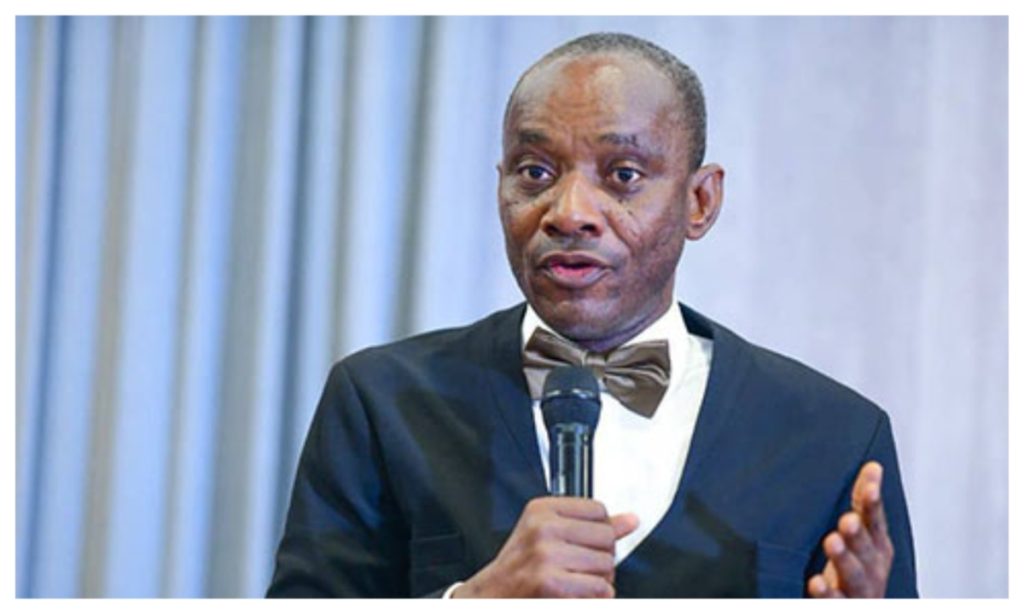
The director of a prominent Abuja-based think tank has criticized recent defections by state governors to Nigeria’s ruling party, arguing the move contradicts the foundational principles of state creation and risks re-centralizing power.
Dr. Sam Amadi, Director of the Abuja School of Social and Political Thought, expressed his disapproval during an interview on Arise Television, which was monitored by the Media Talk Africa. He stated that defections to the All Progressives Congress (APC) undermine the logical purpose of establishing states, which is to allow them to harness local resources for independent development. “The idea of having a state is being able to harness your resources and development,” Amadi said. He questioned the trend, noting, “So now that everybody is going to the centre, are we going back to centralizing?” Amadi further suggested that Nigeria has struggled to align its economic policies with development goals, adding that the political implications of such defections are also concerning.
According to the Media Talk Africa, a significant number of state governors have abandoned their previous political parties to join the APC, the current ruling party. This wave of defections includes governors from Delta, Akwa-Ibom, Bayelsa, Rivers, Enugu, Kano, Plateau, and Taraba states. These states represent key regions across Nigeria’s geopolitical zones, including oil-producing areas in the Niger Delta and populous states in the north and southeast.
The phenomenon of high-profile political cross-carpeting raises questions about the integrity of Nigeria’s federal structure. Amadi’s critique highlights a longstanding tension between federal authority and state autonomy. The defection of governors, particularly from opposition strongholds, may consolidate the APC’s control but could also dilute the political and economic independence of states, a core tenet of the federal system established when states were created. This trend invites scrutiny of whether such moves prioritize personal or short-term political survival over long-term developmental federalism and balanced resource management. The debate underscores ongoing national discussions about the effective distribution of power and resources between Nigeria’s central government and its 36 states.


Comments are closed for this story.