
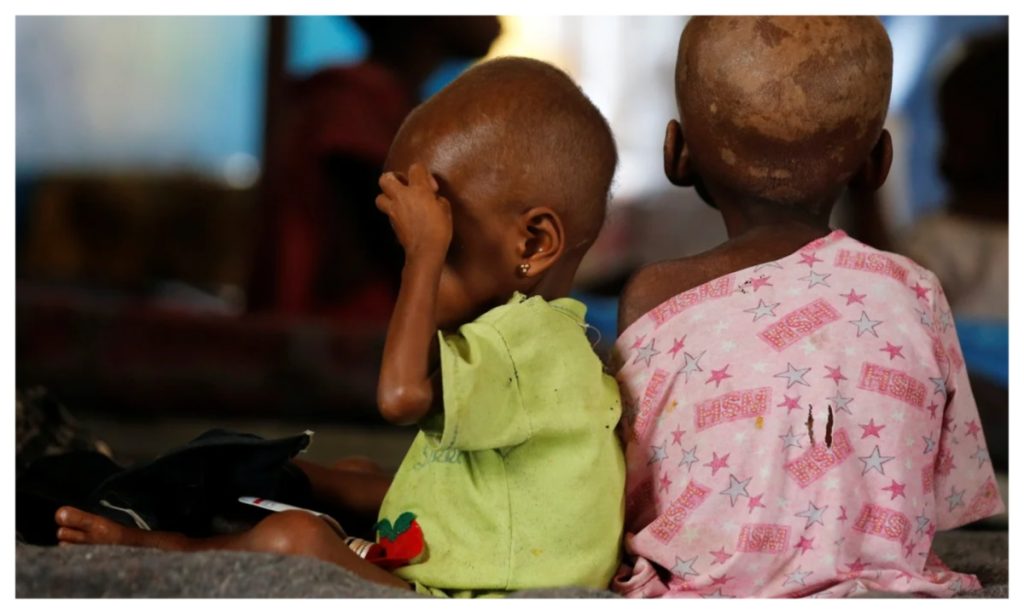
A sharp rise in child malnutrition cases across Nigeria’s Kebbi State is overwhelming health facilities and highlighting a deepening humanitarian and structural crisis, according to medical reports and local accounts.
New data from Médecins Sans Frontières (MSF) reveals a 74.1 per cent increase in admissions of malnourished children at its supported facilities between January and June 2025, compared to the same period last year. The organisation describes this as a reflection of a systemic emergency, not a seasonal fluctuation. Between January and May 2025, MSF treated 24,784 children in inpatient feeding centres and 107,461 in outpatient programmes, marking a 13 per cent rise from 2024 figures.
The crisis is visibly evident in communities, where children exhibit classic signs of severe acute malnutrition, including sunken eyes and wasting. Health workers report that many patients arrive at treatment centres with advanced complications like infections, often after long journeys—some caregivers travel up to 100 kilometres—pointing to significant gaps in accessible primary healthcare.
MSF’s senior medical officer, Dr. Hamza Bello, noted that caseloads have reached unprecedented levels, with one centre admitting approximately 400 children in a single day. He warned that peak hunger periods could exacerbate the situation.
The drivers are multifaceted. Persistent poverty has forced many households into severe food insecurity, with children frequently receiving the smallest portions. This is compounded by poor infant feeding practices, limited dietary diversity, recurrent diseases, and weakened health systems. Agricultural disruption from climate change and insecurity has further reduced local food production.
Civil society groups and nutrition advocates stress that malnutrition is a symptom of broader systemic failures. “When children are malnourished, it shows that families are struggling and systems are not working as they should,” said Aisha Abdullahi, a nutrition advocate.
Long-term consequences include impaired cognitive development and reduced economic productivity. Experts call for sustained government action beyond emergency response, prioritising community-based prevention, infant feeding support, and social protection programmes. MSF has urged the Kebbi State Government to secure a steady supply of Ready-to-Use Therapeutic Food and scale up nutrition services.
Attempts to seek comment from the Kebbi State Commissioner for Health, Hon. Samaila Yakubu Augie, were unsuccessful. A ministry official stated the commissioner, who assumed office less than five months ago after a deployment from another ministry, was out of town and may have limited information on the issue. The ministry has faced criticism over performance, and the governor previously suspended a former health commissioner over alleged dereliction of duty.
With health facilities strained and families overwhelmed, residents and aid organisations warn that without coordinated, long-term strategies addressing poverty, food security, and healthcare access, the crisis will persist, threatening a generation of children.




Comments are closed for this story.