
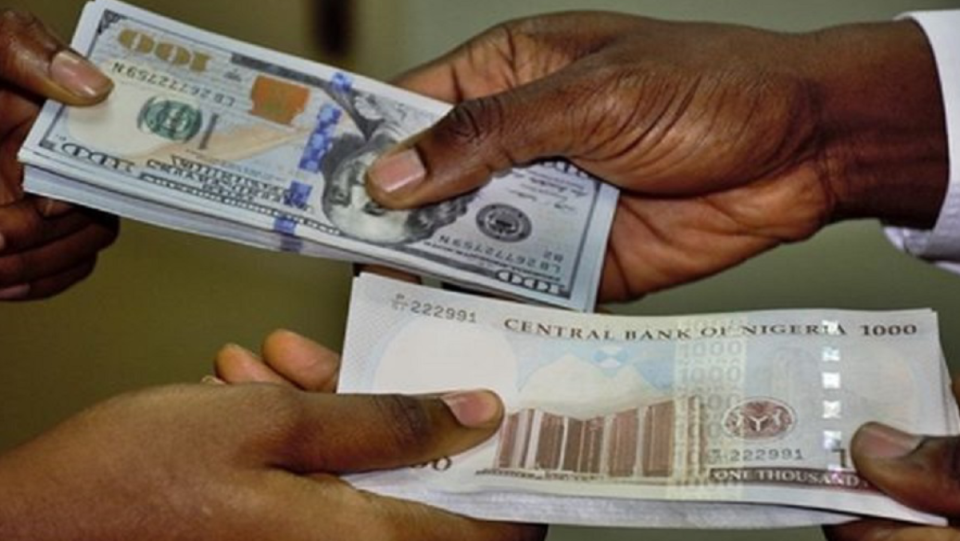
The Nigerian naira depreciated significantly against the US dollar in both the official and parallel foreign exchange markets last week, following confirmation that the Central Bank of Nigeria (CBN) had reduced dollar supply in the system.
Data from the CBN indicated that in the official market, the naira weakened to N1,363.39 per dollar on Friday, down from N1,359.81 on the preceding Thursday. This represented a daily loss of N3.57. On a weekly basis, the local currency declined by N17.07 against the dollar at the regulated window, marking a sustained period of depreciation throughout the week.
The parallel market, often referred to as the black market, saw an even sharper weekly decline. The naira closed at N1,375 per dollar on Friday, compared to N1,317 the previous week, representing a loss of N58 over the period.
This bearish trend across both markets followed public acknowledgment by President Bola Ahmed Tinubu that the CBN had mopped up dollars from the forex market. Such an operation typically involves the central bank purchasing foreign currency, which can reduce immediate supply and influence exchange rates.
Despite the naira’s weakening, Nigeria’s gross external reserves increased to $49.51 billion as of February 25, 2026, according to official figures. Higher reserves are generally viewed as a buffer that can support the national currency, making the concurrent depreciation notable.
The performance highlights the persistent pressure on the naira amid competing demand for foreign exchange. The divergence between rising reserves and a falling exchange rate suggests that underlying factors such as trade imbalances, capital flows, or market expectations continue to exert downward pressure on the local currency in the short term.



Comments are closed for this story.