
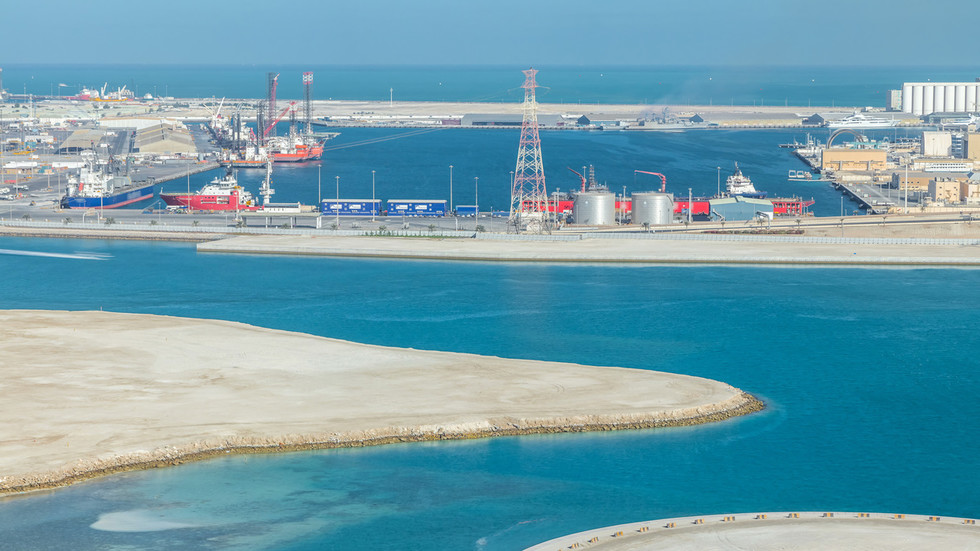
The US-Israel military campaign against Iran has led to estimated repair costs for regional oil and gas infrastructure soaring to as much as $50 billion. Total damage across the Middle East could potentially reach $58 billion, according to energy research firm Rystad Energy. This significant increase from an earlier estimate of $25 billion reflects the extensive destruction that occurred prior to the ceasefire between Washington and Tehran on April 8. While the headline figure is considerable, Rystad emphasizes that the primary challenge lies not in securing funding but in the limited global capacity to supply essential equipment and engineering services, which may result in repair delays lasting for years.
Karan Satwani, a senior analyst at Rystad, noted, “Repair work does not create new capacity. It redirects existing capacity, and that redirection will be felt in project delays and inflation far beyond the Middle East.” He pointed out that while the $58 billion figure is striking, the broader implications for energy investment timelines globally could be equally significant. The analysis from Rystad indicates that downstream refining and petrochemical assets will account for the largest share of spending due to the scale and complexity of the damage incurred.
In addition to refining and petrochemical facilities, industrial, power, and desalination plants could incur costs ranging from $3 billion to $8 billion, with recovery timelines differing by country based on execution capacity and supply chain constraints. Iran is expected to face the most extensive damage, with costs potentially reaching $19 billion across its gas processing, refining, and export infrastructure. In contrast, Qatar’s impact is more concentrated and technically complex, particularly at the Ras Laffan LNG hub, where repairs may coincide with ongoing expansion projects.
Tehran has announced plans to seek compensation from five Arab states—Bahrain, Jordan, Qatar, the UAE, and Saudi Arabia—arguing that these countries acted as “co-participants” with the US and Israel, thereby breaching their obligations toward Iran. Humanitarian groups have reported widespread civilian impacts as well. The Iranian Red Crescent Society (IRCS) stated that 125,630 civilian units were affected, including 100,000 residential homes, many of which were completely destroyed. Additionally, damage was recorded to 23,500 commercial properties, 339 medical facilities, 32 universities, 857 schools, and 20 Red Crescent centers. IRCS head Pir Hossein Kolivand highlighted that around 15 major logistical sites, including fuel depots, airports, and civilian aircraft, were hit, leading to significant disruptions in transport, energy, and public services.


Comments are closed for this story.