
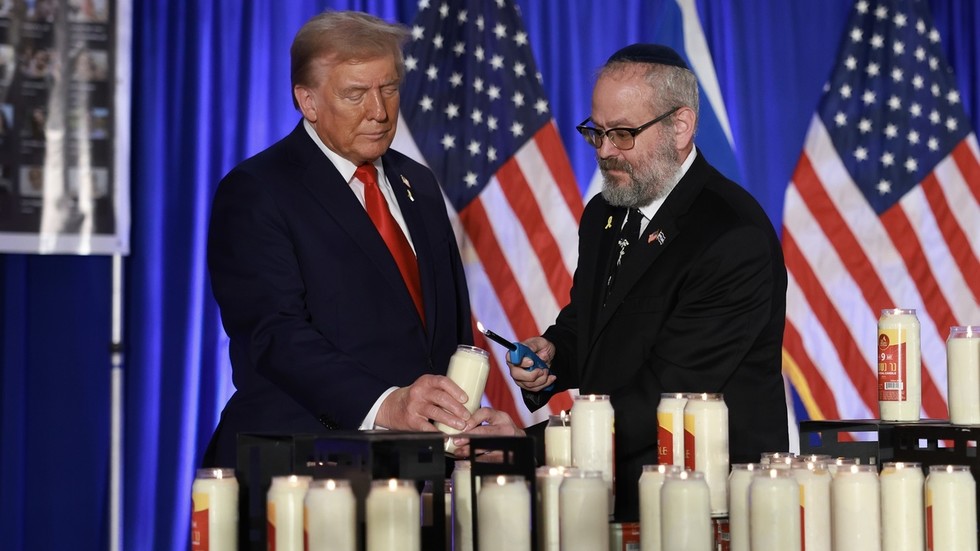
The United States is reportedly considering imposing travel restrictions on European officials attending the 2026 FIFA World Cup due to rising concerns over anti-Semitism in Europe. This proposal was raised by Yehuda Kaploun, an ultra-Orthodox rabbi who serves as a special envoy for combating anti-Semitism under President Donald Trump. During an event in Brussels organized by the European Jewish Association, Kaploun stated that the administration is “holding countries accountable for ministers who are saying things, and they are not being allowed into the country.” An EU official cited by Euractiv claimed that Kaploun privately connected the allegations of anti-Semitism to access for the World Cup.
When asked for clarification on the matter, a US official stated that the administration “can take any step that the secretary of state and the president deem necessary,” but declined to provide further details. This potential move comes amid heightened diplomatic tensions between Israel and several European governments. For instance, Spain has condemned recent Israeli military actions as illegal and has refused to allow the US to use its airbases. Additionally, France has blocked flights carrying munitions for Israel from crossing its airspace, while Belgium reportedly intercepted two military shipments from Britain that were passing through Liege Airport en route to Tel Aviv. In the Netherlands, lawmakers voted to suspend and partially scrap an EU-Israel association agreement, a decision that gained momentum following Hungarian Prime Minister Viktor Orban’s recent electoral defeat.
Accusations of anti-Semitism have often been employed by Israeli officials to counter critics of its policies. A recent report from Israel’s Ministry of Diaspora Affairs identified ten leading “anti-Semitic influencers” of 2025, which included six Americans such as white nationalist Nick Fuentes and former Trump ally Tucker Carlson. Notably, Swedish environmental activist Greta Thunberg, who has expressed support for the Palestinian cause, also appeared on this list.
The 2026 World Cup, which will be hosted by the United States, Canada, and Mexico, faces additional challenges beyond these diplomatic disputes. US hotels have begun lowering summer prices amid fears of weak demand, driven by concerns over inflation, anti-American sentiment, and high ticket costs that may deter international visitors. FIFA has also faced criticism for canceling thousands of hotel reservations intended for teams and technical staff, exceeding typical overbooking practices for large events. Fans have expressed frustration over ticketing practices, particularly regarding a newly introduced premium tier above Category 1, which has led to confusion over seating arrangements.
Moreover, the tournament has been directly affected by the US-Israeli conflict with Iran, as Tehran has stated it has no intention of sending a team to compete on what it considers enemy territory. Iranian Football Federation president Mehdi Taj has suggested relocating matches involving Iran to Mexico, although FIFA chief Gianni Infantino has indicated that the schedule will remain unchanged.

Comments are closed for this story.