
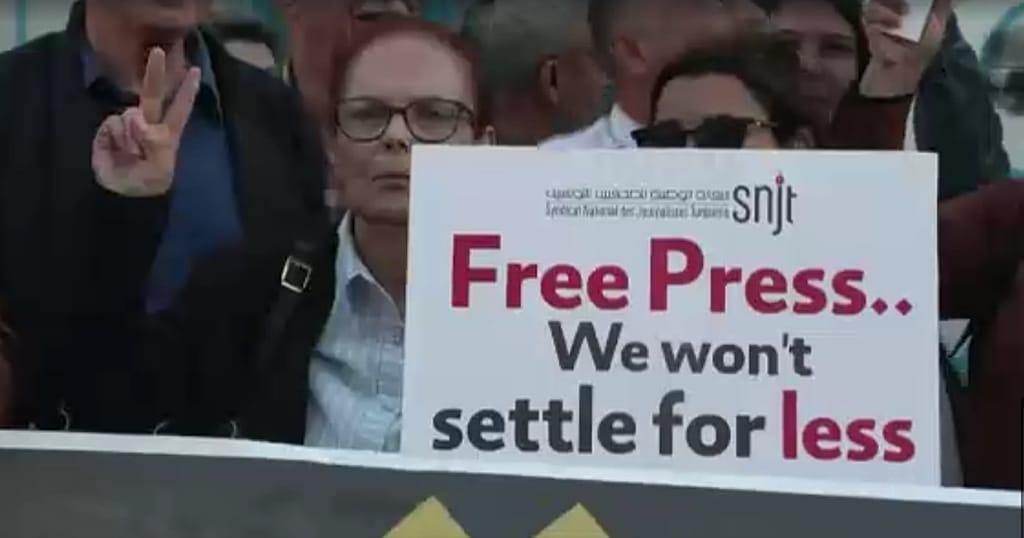
Dozens of demonstrators gathered outside the headquarters of the Tunisian journalists’ union in Tunis on Friday, demanding greater press freedom and the release of two detained columnists. The protest, organized by the union and supported by family members, featured signs reading “Free independent press” and chants of “innocent people are in prison,” reflecting growing concern over the country’s deteriorating media environment.
The demonstrators were voicing support for Franco‑Tunisian columnist Mourad Zeghidi and his colleague Borhen Bsaies, who have been held in detention since 2024. Both were initially convicted on a charge of “spreading false news” and subsequently faced additional accusations of money laundering and tax evasion. In January, a court sentenced them to three and a half years in prison, and an appeal trial is scheduled to resume on Tuesday.
Zied Dabbar, president of the Tunisian journalists’ union, warned that journalism in Tunisia is under threat. He noted that Zeghidi has now spent more than 700 days behind bars, initially prosecuted under Decree 54 after posting on Facebook in solidarity with fellow journalist Mohamed Boughaleb, who is also imprisoned. Dabbar described the situation as a broader assault on the independence of the press.
Prominent left‑wing activist Hamma Hammami warned that the government’s actions aim to establish an “authoritarian regime.” He described the current climate as a “creeping fascism” that seeks to suppress press freedom, the right to organize and the right to protest, leaving citizens without effective means to defend their rights.
Among the protesters were Zeghidi’s daughters. Inès Zeghidi told the crowd, “We have come to show our father that we are not giving up, that we will keep fighting, and that the time for silence is far behind us.” Their participation underscores the personal dimension of the case and the wider demand for accountability.
Human‑rights organizations, both national and international, have repeatedly highlighted a regression in rights and liberties in Tunisia since President Kais Saied suspended parliament in July 2021 and assumed executive authority. The current protest adds to a series of actions drawing attention to the perceived erosion of democratic norms and the tightening of state control over the media.
The upcoming appeal hearing will be closely watched by journalists, NGOs and foreign observers as a barometer of Tunisia’s commitment to press freedom and the rule of law. Continued demonstrations are likely as civil society groups seek to maintain pressure on authorities to reverse what they describe as an ongoing crackdown on independent journalism.


Comments are closed for this story.