
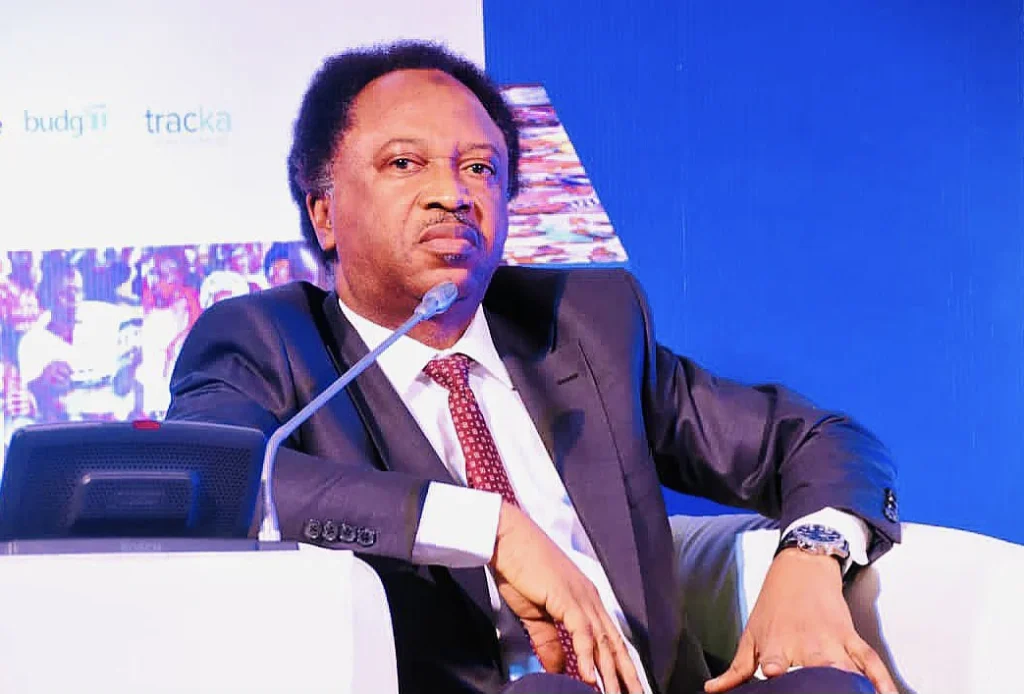
Former Kaduna Central Senator Shehu Sani said on the Honest Bunch Podcast that President Bola Tinubu, former Vice President Atiku Abubakar, former President Olusegun Obasanjo and businessman‑politician Peter Obi share the same political ideology.
Sani argued that Obi’s support is largely “tribal,” noting that many of his backers come from the same ethnic background as the candidate. “If Obi becomes the President of Nigeria today, nothing changes; everything remains the same,” he said.
According to Sani, “Peter Obi, Obasanjo, Atiku and Tinubu are the same people who come from the same ideological perspective; they all believe and subscribe to the same thinking. Tinubu will win the 2027 election.”
He linked the alleged ideological convergence to the country’s security challenges, recalling the period when former President Muhammadu Buhari was in office. “When Buhari was in power, the North was quiet while people were being slaughtered, kidnapped and insecurity was everywhere,” Sani claimed.
Sani recalled his own experience as a senator, saying that each time he raised the issue of killings and kidnappings affecting his constituents, he faced opposition from northern senators. “The first attack I got was from Northern senators,” he said.
The comments were made during a visit to the Honest Bunch Podcast, a platform that frequently hosts Nigerian politicians and public figures. Sani’s remarks come as the 2023 presidential election results continue to shape political discourse and as parties prepare for the 2027 electoral cycle.
Political analysts note that the assertion of a uniform ideology among Nigeria’s major politicians is contested. While Tinubu, Atiku and Obasanjo represent distinct parties—All Progressives Congress, Peoples Democratic Party and the All Progressives Grand Alliance respectively—each has articulated different policy priorities on the economy, security and governance.
Peter Obi, the 2023 presidential candidate of the Labour Party, has positioned himself as an “alternative” to the traditional political establishment, emphasizing anti‑corruption measures and fiscal prudence. His supporters, however, include significant numbers from his home state of Anambra and the broader Igbo region, which Sani described as “tribal” backing.
Observers say Sani’s statements reflect ongoing tensions between regional, ethnic and political loyalties in Nigeria’s multipartite system. The remarks also underscore the difficulty of achieving a consensus on security reforms, a key issue that has dominated public debate since Buhari’s tenure.
As Nigeria approaches the next electoral cycle, Sani’s assertions may influence discussions about party realignments and the perceived homogeneity of political thought among the nation’s leading figures. Stakeholders will be watching whether such claims affect voter perceptions ahead of the 2027 presidential election.

Comments are closed for this story.