
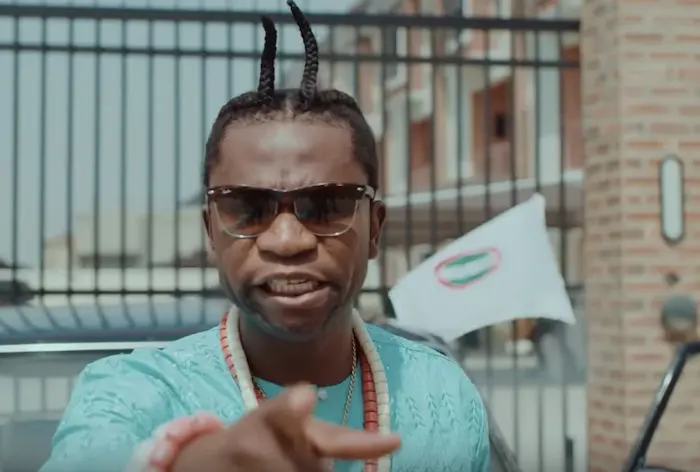
Nigerian rapper Speed Darlington criticised fellow artist Portable’s self‑styled image of wealth during a livestream with host Peller, asserting that the singer’s appearance does not match his financial reality.
The confrontation occurred when Peller encouraged Darlington to upload his latest track to Audiomack, a free streaming platform popular with African musicians. Darlington declined, stating that the service “doesn’t generate revenue” and that listeners must pay to access his music. He added, “I can’t see any proof of money on Portable… Anyone who wants to hear my music must pay for it.”
Portable, whose real name is Samuel Akpobome, has previously voiced concerns about low earnings from digital platforms. In a separate livestream weeks earlier, he appealed to industry figures, including celebrated music executive Don Jazzy, for assistance with digital marketing. Portable claimed his songs receive worldwide streams but generate little income, prompting him to seek better monetisation strategies.
The exchange highlights a broader debate within the Nigerian music scene about the profitability of streaming services. While platforms such as Audiomack, Spotify, and Apple Music provide exposure, many artists argue that royalty rates are insufficient to sustain livelihoods, especially for those who have not yet secured major label backing or lucrative endorsement deals.
Industry analysts note that the Nigerian market remains heavily dependent on physical sales, live performances, and brand partnerships for revenue. According to data from the Nigerian Communications Commission, streaming contributes a growing but still modest share of total music consumption. Consequently, high‑profile artists often diversify income streams, combining digital releases with concerts, merchandise, and sponsorships.
Both Darlington and Portable have sizable followings on social media, and their public dispute may draw further attention to the financial challenges faced by emerging and mid‑tier performers. The situation also underscores the importance of transparent royalty reporting and the need for scalable monetisation models that align with artists’ expectations.
As the debate continues, stakeholders—including record labels, streaming platforms, and regulatory bodies—are being called upon to address the gap between streaming popularity and actual earnings. Future negotiations may result in revised payout structures or new initiatives aimed at supporting creators across Africa’s rapidly expanding music industry.



Comments are closed for this story.