
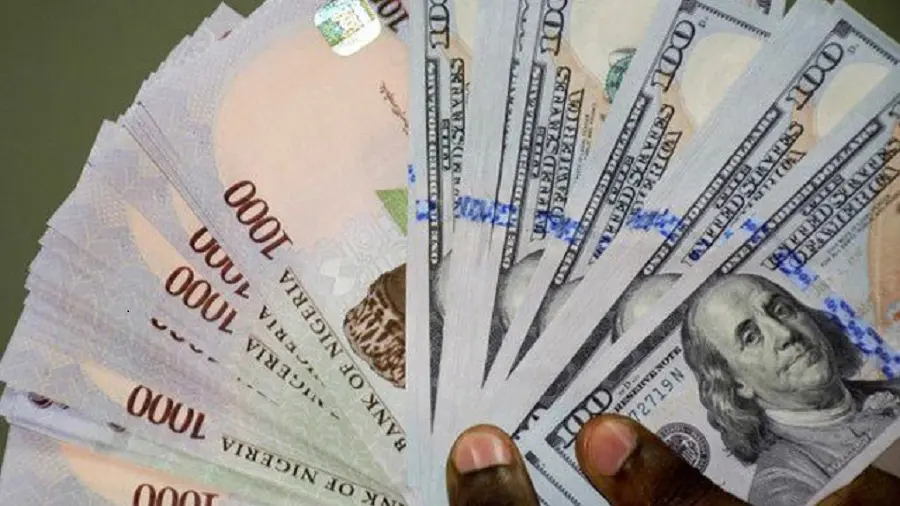
The naira slipped against the U.S. dollar on Thursday, ending the day’s foreign‑exchange trading on a negative note. According to data released by the Central Bank of Nigeria (CBN), the official interbank rate moved to N1,353.91 per dollar, down from N1,348.45 recorded on Wednesday. The one‑day decline of N5.46 represents a measurable weakening of the local currency in the official market.
Parallel movements were observed in the parallel market. Abubakar Hassan, a bureau de change operator in Abuja’s Wuse Zone 4, reported that the dollar was quoted at N1,426 on Thursday, up from N1,400 the previous day. The rise in the parallel rate mirrors the depreciation seen in the formal market and underscores the broader pressure on the naira across trading platforms.
Thursday’s downward trend reversed the modest gain the naira posted on Wednesday, when it briefly appreciated against the dollar. Analysts attribute the recent volatility to a combination of domestic and external factors, including the continued erosion of Nigeria’s foreign‑exchange reserves. The CBN’s latest figures show reserves falling to N48.48 billion as of 22 March 2026, a level that limits the central bank’s capacity to intervene and stabilise the market.
The depreciation occurs against a backdrop of persistent macro‑economic challenges. Nigeria’s economy remains heavily reliant on oil revenues, while global commodity price fluctuations and tightening monetary conditions abroad have constrained foreign‑currency inflows. Reduced reserve buffers have heightened market sensitivities to any shifts in demand for dollars, prompting sharper movements in both official and parallel rates.
Stakeholders are watching closely for policy responses. The CBN has previously employed a range of measures—such as adjusting the official rate, tightening monetary policy, and engaging in foreign‑currency swaps—to curb excess volatility. However, the latest data suggest that existing tools have been insufficient to halt the recent slide.
The current exchange‑rate trajectory has implications for import‑dependent sectors, debt servicing obligations, and inflationary pressures. Companies reliant on imported inputs may face higher costs, while consumers could see the purchasing power of the naira erode further. Monitoring the evolution of the foreign‑exchange market and reserve levels will be essential for businesses and policymakers alike as Nigeria navigates a period of heightened financial stress.



Comments are closed for this story.