
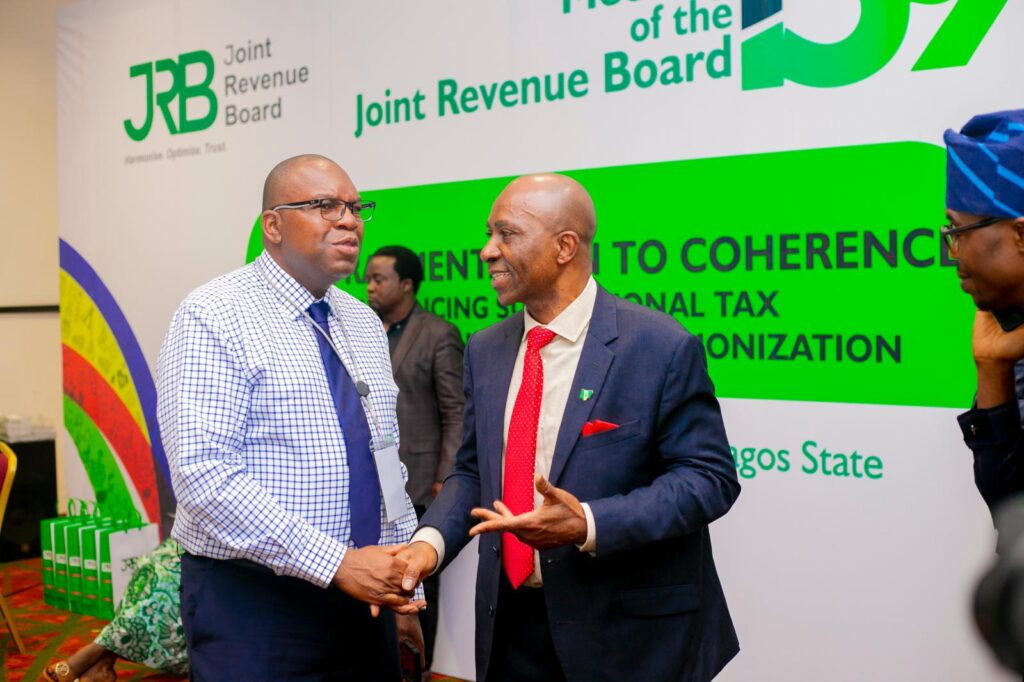
Nigeria’s Tax Ombudsman, John Nwabueze, pledged to deepen cooperation with federal, state and local revenue agencies to boost operational efficiency, the Office of the Tax Ombudsman said on Thursday.
The commitment was made at the 159th meeting of the Joint Revenue Board (JRB) in Lagos, a forum that brings together the revenue boards of Nigeria’s 36 states, the Federal Capital Territory Revenue Service and a range of tax‑collecting agencies. Speaking on “The Role of the Tax Ombudsman in Facilitating Dispute Resolution and Strengthening Trust in the Tax System in the Context of Emerging Tax Reforms,” Nwabueze highlighted the Office’s function as an independent, impartial body created to protect taxpayers’ rights and promote administrative justice.
The Office of the Tax Ombudsman (OTO) acts as a bridge between taxpayers and revenue authorities. It receives and investigates complaints, then seeks resolution through mediation and conciliation—processes that are faster, less costly and less adversarial than court litigation. By identifying recurring administrative challenges, the OTO also recommends reforms intended to improve fairness, transparency and overall efficiency in tax collection.
Nwabueze stressed that the OTO does not determine tax liability, nor does it replace the courts or the Tax Appeal Tribunal. “Our mandate is to ensure that tax administration is conducted in a fair, transparent and accountable manner,” he said. The Office’s broader functions include impartial mediation, watchdog oversight of arbitrary fiscal actions, taxpayer‑rights education, and the promotion of systemic improvements.
According to the Chief Press Secretary, Chukwudi Achife, the OTO is a “bold and progressive effort to harmonise revenue systems, expand the tax base and improve compliance.” Nwabueze argued that the presence of a neutral platform for grievance redress builds public confidence, encouraging compliance driven by trust rather than coercion.
While acknowledging that tax reforms often generate friction, Nwabueze positioned the OTO as a key instrument for smoothing those points of tension. He called on all revenue‑generating bodies—federal, state and local—to integrate the Ombudsman’s office into policy dialogues and operational frameworks, asserting that seamless coordination across the tax ecosystem is essential for Nigeria’s fiscal health.
The statement underscores the growing emphasis on collaborative governance in Nigeria’s tax sector, reflecting a shift toward dispute‑resolution mechanisms that prioritize efficiency and taxpayer confidence. The OTO’s role in the upcoming fiscal year will likely focus on embedding its mediation processes within the broader tax administration architecture, as authorities seek to balance revenue mobilisation with equitable service delivery.



Comments are closed for this story.