
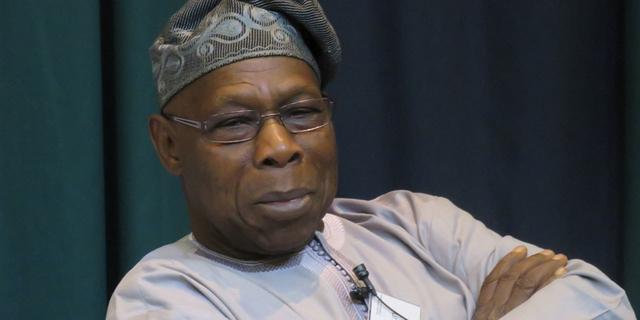
Former President Olusegun Obasanjo warned that any government unable to protect the lives and property of its citizens has forfeited its moral and constitutional right to remain in power. The remarks were made during an interview on Sonia Irabor Live on News Central, where Obasanjo also expressed concern about Nigeria’s waning influence in global affairs.
Obasanjo said Nigeria is no longer “at the table” when international decisions are made, attributing the decline to a broader leadership deficit and the country’s inability to affect events beyond its borders. He stressed that the primary duty of any administration is to ensure the safety of its people. “A government that cannot give security of life and property to its citizens has forfeited the right of existence,” he said, adding that the growing normalisation of kidnapping and violent crime signals a dangerous breakdown of state responsibility.
The former president highlighted the alarming rise in insecurity, noting that abductions are increasingly treated as routine occurrences. He recalled a time when Nigerians, especially in the North, could travel freely across the country without fear—a situation he said has deteriorated over decades of poor governance, the unchecked proliferation of arms after the civil war, and failure to address emerging threats promptly.
Obasanjo warned that the surge in out‑of‑school children, estimated at about 20 million, creates a long‑term security risk. He described this demographic as a potential recruitment pool for extremist groups and urged the government to act swiftly. He also questioned whether the current administration has the political will to implement recommendations from policy research bodies such as the National Institute for Policy and Strategic Studies (NIPSS), which have been tasked with analysing the root causes of insecurity.
Speaking on the acceptance of kidnapping as a “normal part of daily life,” Obasanjo cautioned that such a trend must be resisted firmly. He called for a comprehensive security overhaul, stating that restoring public confidence requires both immediate action against criminal networks and strategic, long‑term reforms in governance, education, and arms control.
Obasanjo’s comments underscore growing domestic and international concern about Nigeria’s security landscape and its impact on the country’s standing in the global community. Whether the current government will adopt the suggested reforms and heed the former president’s warning remains a key question for policymakers and observers alike.


Comments are closed for this story.