
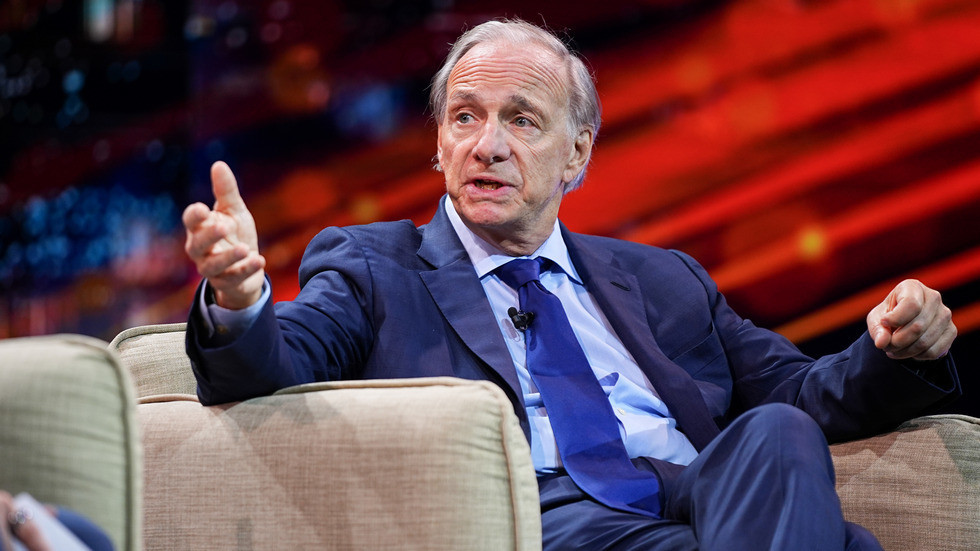
Ray Dalio, the founder of Bridgewater Associates, warned on Monday that the United States appears to be entering a period of stagflation for the first time in several decades. The billionaire investor made the comment while discussing the impact of the war in Iran and the broader challenges facing the global economic order.
Dalio said “we are certainly in a stagflationary period” and cautioned the Federal Reserve against lowering interest rates, arguing that doing so would damage the central bank’s credibility. Stagflation—characterised by stagnant growth, high inflation and elevated unemployment—last affected the United States in the 1970s and early‑1980s, when an OPEC oil embargo drove energy prices sky‑high. At that time, the Fed responded with aggressive rate hikes that pushed borrowing costs above 20 % and ultimately forced a sharp recession.
Current data show a mixed picture. Annual consumer‑price inflation eased to 3.3 % in March, above the Federal Reserve’s 2 % target but well below the double‑digit peaks of the 1970s. Real gross domestic product grew only 0.5 % in the fourth quarter of 2025, a sharp slowdown from the 4.4 % expansion recorded in the previous quarter. The unemployment rate stood at 4.3 % in March, modestly higher than pre‑pandemic levels but far below the double‑digit joblessness that defined classic stagflation. Fed Chair Jerome Powell described the situation as “a very difficult situation” but stopped short of labeling it textbook stagflation.
Dalio linked the economic pressures to the ongoing conflict in Iran, describing the war as a “problem” that tests the United States’ resolve and its ability to achieve strategic objectives. He highlighted the strategic importance of the Strait of Hormuz, noting that disruptions there have worldwide implications, and compared the situation to other chokepoints such as the Strait of Malacca. According to Dalio, the lack of clear checks on major maritime routes signals a broader shift in the international order.
The investor pointed to several other indicators of change, including a rapid rise in yuan‑denominated transactions, growing political polarization within major economies, and widening wealth gaps. He warned that the post‑World‑War II rules‑based system is giving way to a “might‑is‑right” environment, where power, rather than established norms, dictates outcomes.
Dalio’s track record includes accurate forecasts of the 2008 financial crisis and the 2011 European debt crisis, based largely on historical pattern analysis. However, his projected 2015 financial crash—modeled after the 1937 downturn—did not materialise. He has also warned that the United States could face a “debt death spiral” in the coming years, driven by rising interest obligations and waning demand for U.S. assets.
The remarks arrive as policymakers debate the appropriate monetary response to persistent inflation and slower growth. Whether the Federal Reserve will heed Dalio’s caution about maintaining rate hikes remains to be seen, but the warning underscores the delicate balance between curbing price pressures and avoiding a deeper economic slowdown.



Comments are closed for this story.