
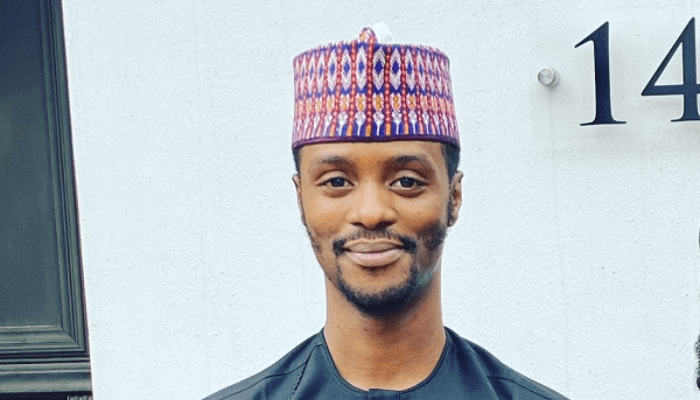
A son of former Kaduna State governor Nasir El‑Rufai, Bashir El‑Rufai, has called for the election of a “pure‑blood Igbo President,” saying that without such a leader the country will continue to bear the scars of past conflicts.
Bashir posted on X, writing: “It’s high time Nigeria had a pure‑blood Igbo President. Until then, all these wounds of the past will persist to remain.” His remarks revive a long‑standing demand from parts of the South‑East for an Igbo head of state, a sentiment that resurfaced prominently during the run‑up to the 2023 presidential election.
The call for an Igbo president has historical roots in Nigeria’s ethno‑regional politics. In the 2019 election, Peter Obi, former governor of Anambra State, was selected as the running mate of Peoples Democratic Party (PDP) presidential candidate Atiku Abubakar. The partnership dissolved after internal disputes within the PDP, prompting Obi to leave the party in 2023 and join the Labour Party (LP). He ran for president under the LP banner in the February 2023 poll, finishing third behind Atiku and incumbent President Bola Tinubu of the All Progressives Congress (APC).
During the 2023 campaign, several South‑Eastern groups staged protests and issued statements urging political parties to endorse an Igbo candidate, arguing that the region had been historically marginalized in the highest office. While the protests did not alter the final outcome, they highlighted ongoing regional grievances.
Bashir’s recent statement adds a personal dimension to the broader debate, tying the issue to the legacy of his father, Nasir El‑Rufai, who served as governor of Kaduna State from 2015 to 2023 and remains a prominent figure in Nigerian politics. By invoking the notion of “pure‑blood” ethnicity, Bashir emphasises a view that ethnic identity should play a decisive role in presidential selection—a stance that contrasts with Nigeria’s constitutional provision for a secular, merit‑based democracy.
The demand for an Igbo president continues to shape political discourse ahead of the 2027 general elections. Opposition parties and civil‑society organisations are expected to address ethnic representation in their platforms, while the ruling APC may seek to balance regional interests to maintain national cohesion. Observers note that any shift toward overt ethnic prioritisation could impact Nigeria’s longstanding “zoning” arrangement, which informally rotates the presidency among the country’s major regions.
As the country approaches its next electoral cycle, the conversation sparked by Bashir El‑Rufai underscores the enduring significance of ethnic considerations in Nigerian politics and the challenge of reconciling them with a unified national agenda.

Comments are closed for this story.