
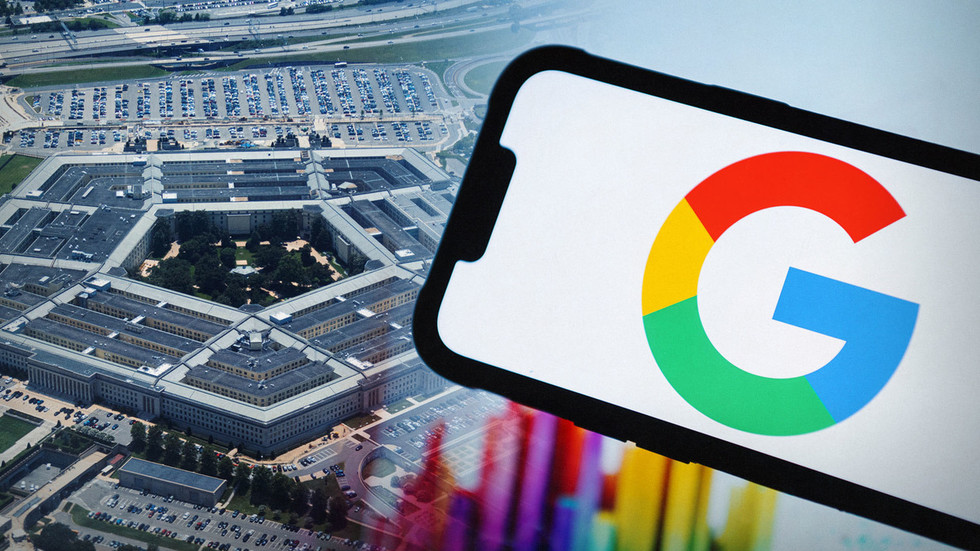
Google has agreed to extend its AI partnership with the U.S. Department of Defense, allowing the Pentagon to use the company’s Gemini models on classified networks, according to a New York Times report. The expanded arrangement builds on a $200 million contract signed in 2025 and grants the military access to Google’s generative‑AI systems for “any lawful governmental purpose,” a clause that mirrors terms used in agreements with other AI developers.
The deal was confirmed by Google, though the company provided no further details. A spokeswoman said the firm is “proud to be part of a broad consortium providing AI services in support of national security” and reiterated its commitment to prohibit the use of its technology for domestic mass surveillance or autonomous weapons without human oversight.
U.S. officials said the agreement is intended to give the defense establishment greater flexibility and reduce reliance on a single supplier as AI becomes embedded in mission planning, target selection and other sensitive operations. The contract reportedly permits the Pentagon to request adjustments to Google’s safety filters, while the company is barred from vetoing “lawful government” decisions—a provision that has drawn criticism from human‑rights groups and some members of Google’s workforce.
Internal opposition at Google has intensified. Over 600 employees, including senior staff, signed an open letter this week urging CEO Sundar Pichai to halt military applications of the firm’s AI, warning that the technology could be employed in “inhumane or extremely harmful ways.” The signatories called for a moratorium on such contracts, greater transparency and the creation of an ethics board to oversee military partnerships.
The Google‑Pentagon agreement follows a recent dispute between the Department of Defense and AI startup Anthropic. Earlier this year Anthropic refused to relax safeguards on surveillance and autonomous weapons, leading the Pentagon to label the company a “supply‑chain risk” and effectively exclude it from future contracts. Anthropic is now challenging that decision in court.
Other AI firms have taken different approaches. OpenAI recently signed a deal to run its models on classified Pentagon networks, while Musk’s xAI has integrated its technology into the military’s internal platform, GenAI.mil, used by millions of service members.
The expansion of AI use by the U.S. military continues to provoke protests from tech workers and activists, who warn that insufficient accountability could enable surveillance or lethal autonomous systems. Demonstrators gathered outside OpenAI’s offices last month, chanting slogans such as “No AI surveillance state” and “Orwell warned us.” The Pentagon maintains that it has no plans to employ AI for mass domestic surveillance or fully autonomous weapons, but it continues to pursue broad access to advanced AI capabilities for lawful purposes.



Comments are closed for this story.