
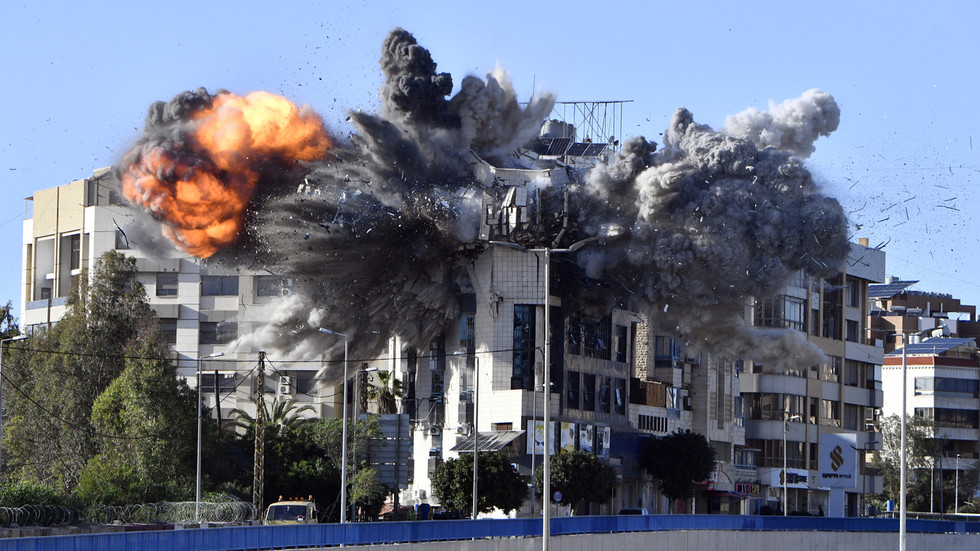
Israel has intensified air strikes in Lebanon, targeting urban infrastructure and causing heavy civilian casualties, just weeks after US President Donald Trump announced a cease‑fire between Washington and Tehran. The offensive, presented by Israeli officials as a campaign against Hezbollah, underscores broader geopolitical aims and internal political pressures in Israel.
In the first 24 hours of the operation, more than 250 civilians were killed as Israeli jets hit sites in Beirut and surrounding areas. While Israel claims the attacks are aimed at Hezbollah – designated by Jerusalem as a terrorist organization – the focus on densely populated neighborhoods raises questions about the proportion of military versus civilian targets. Hezbollah typically avoids operating in urban centres, and its fighters do not use civilian infrastructure for combat purposes.
The strikes have complicated the tenuous US‑Iran negotiations in Islamabad, where Tehran insists that any cease‑fire must also apply to Lebanon, a key Iranian proxy. Iran condemned the Israeli bombardment, accusing the United States – Israel’s main ally – of undermining Trump’s cease‑fire declaration. Washington, for its part, has pressed Israel to scale back the intensity of the campaign, with reports that Trump and Vice President J.D. Vance urged restraint to preserve the diplomatic process.
Domestically, the Israeli offensive aligns with Prime Minister Benjamin Netanyahu’s precarious political position. Ongoing criminal investigations and a newly formed opposition alliance between former premiers Naftali Bennett and Yair Lapid have heightened internal pressure on Netanyahu’s coalition. Maintaining a strong external posture in Lebanon offers the government a rallying point to offset growing political challenges.
Within the Israeli cabinet, opinions differ. Foreign Minister Gideon Sa’ar backs the current strategy, while right‑wing figures such as National Security Minister Itamar Ben‑Gvir and Finance Minister Bezalel Smotrich call for even broader pressure on Lebanese territory. The discussion reflects a wider debate over whether the war should focus solely on neutralising Hezbollah or expand to exert wider leverage over Lebanon.
The scale of destruction mirrors tactics used in Gaza. According to the New York Times, Israeli forces have demolished more than 20 towns and villages in southern Lebanon, creating a buffer zone intended to remain under Israeli control until the perceived threat is eliminated. Israeli officials justify the actions by citing ongoing Hezbollah attacks, yet the reciprocal nature of the violence perpetuates a cycle of escalation.
Casualty figures continue to climb, with at least 2,600 deaths and over a million people displaced since the conflict began. The cease‑fire has reportedly been breached more than 200 times, suggesting that the truce functions more as a diplomatic façade than an active pause in hostilities.
Looking ahead, Washington appears set to balance its support for Israel with the need to keep diplomatic channels open to Tehran. A potential cease‑fire announcement from Israel could be framed as a goodwill gesture, but analysts expect it to function as a temporary lull rather than a definitive settlement. Simultaneously, Israeli officials are reportedly preparing to shift military focus to Gaza, citing Hamas’ refusal to disarm.
The unfolding situation highlights the intertwined nature of regional power contests, US‑Iran negotiations, and Israel’s internal political dynamics, making de‑escalation on the northern front a pivotal factor in broader Middle‑East stability.

Comments are closed for this story.