
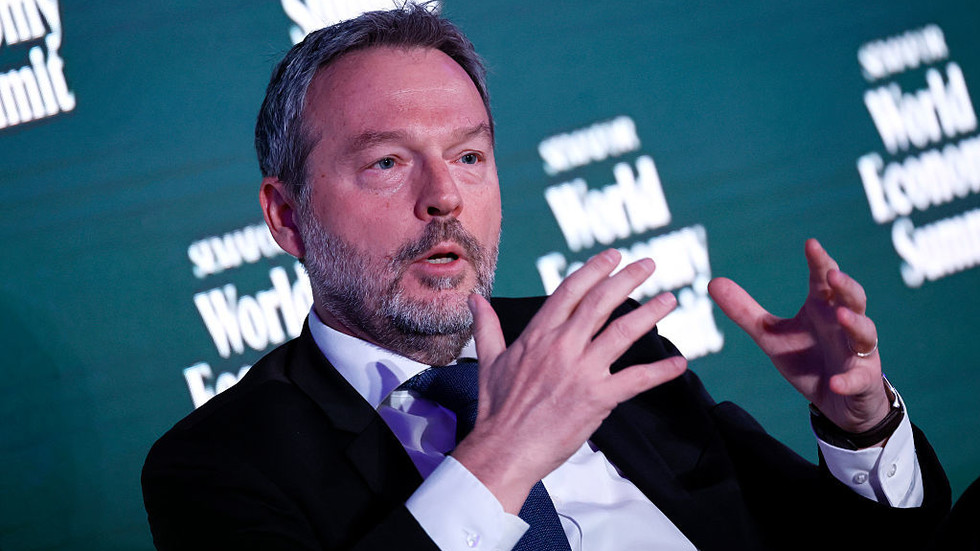
Soaring energy costs are tightening Europe’s industrial sector and undermining its global competitiveness, Central Bank Governor Pierre Wunsch warned in an interview with the Financial Times.
Wunsch said the bloc’s energy‑intensive industries are under “mounting pressure” as higher power prices persist after the Covid‑19 pandemic, the Ukraine war and the latest US‑Israel conflict over Iran. He argued that the EU has not adapted to a changing geopolitical landscape, pointing to US protectionist measures and Chinese subsidies as factors eroding Europe’s ability to influence global standards. “The EU is just not competitive, that’s it,” he said.
The energy squeeze has already forced the EU to scale back its green‑energy ambitions, Wunsch added, because policymakers are prioritising growth over climate targets. EU Energy Commissioner Dan Jørgensen echoed the concerns, warning that prolonged uncertainty and rising fossil‑fuel import costs could deepen the bloc’s energy crisis.
The situation stems partly from the EU’s decision to cut Russian energy supplies after the escalation of the Ukraine conflict. Simultaneously, the US‑Israel confrontation with Iran has tightened global oil markets, pushing prices higher and raising fuel costs for consumers worldwide. The EU imports roughly 75 % of its jet fuel from the Middle East, and disruptions to the Strait of Hormuz—through which about one‑fifth of global oil and liquefied natural gas passes—have amplified the pressure.
These developments have revived debate within Europe over existing sanctions on Russia. In January, the European Commission reaffirmed its aim to phase out Russian fossil fuels by 2027, yet data show that EU countries increased imports of Russian LNG in the first quarter of this year.
Kremlin envoy Kirill Dmitriev warned that “Russophobic politicians” could drive deindustrialisation in Europe and that Western governments may eventually have to seek renewed access to Russian energy.
The convergence of high energy prices, geopolitical tensions and divergent policy responses highlights the EU’s challenge: balancing energy security, industrial competitiveness and climate objectives while navigating an increasingly volatile global market.

Comments are closed for this story.