
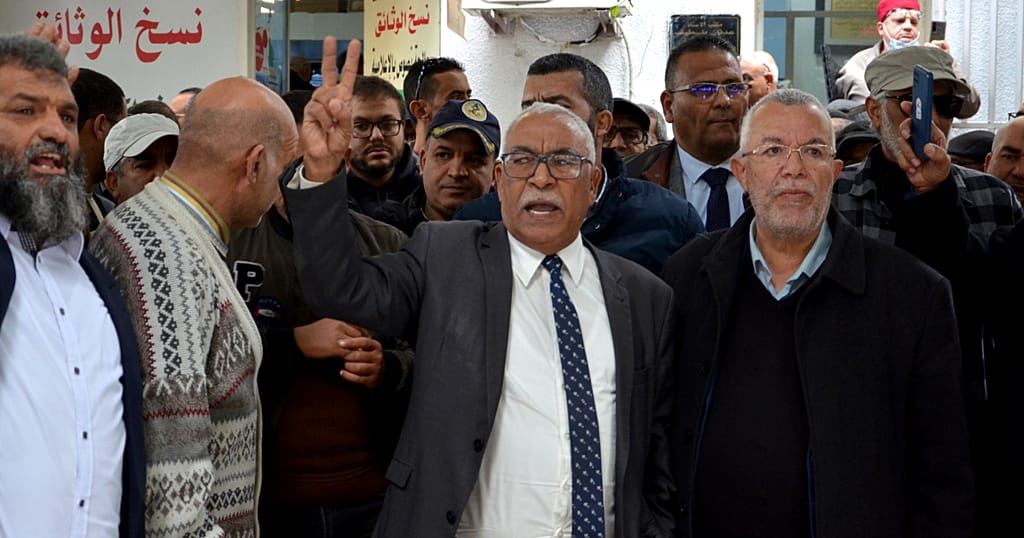
A Tunisian court on Tuesday sentenced former justice minister Noureddine Bhiri, a senior figure in the opposition Ennahda movement, to 20 years in prison for alleged involvement in the issuance of passports and citizenship documents to foreign nationals wanted in terrorism‑related cases. The verdict adds to a 43‑year sentence Bhiri has been serving since last year for a separate “conspiracy against state security” conviction.
The court’s decision, reported by state broadcaster Ettounsi, stems from accusations that, while Bhiri served as justice minister in 2012, fraudulent travel and identity papers were granted to individuals under international terrorism investigations. Bhiri’s lawyers denied the charges, calling the trial politically motivated and lacking substantive evidence.
The sentencing follows a broader pattern of prosecutions targeting prominent critics of President Kais Saied. Since the president dissolved parliament and assumed expanded powers in 2021, dozens of politicians, journalists, lawyers and civil‑society activists have been arrested or convicted on a range of security‑related offenses. International human‑rights organisations have condemned the wave of arrests as a crackdown on dissent and a threat to judicial independence.
Ennahda, Tunisia’s main Islamist opposition party, has repeatedly denounced the rulings against its members as part of a systematic effort to weaken political opposition. The party’s spokesperson said the verdict “further erodes the rule of law” and called on the international community to monitor the case.
Legal experts note that the dual convictions underscore the heightened use of anti‑terrorism statutes in Tunisia’s post‑revolutionary legal landscape. The 20‑year term for the passport‑fraud case runs concurrently with Bhiri’s existing 43‑year sentence, meaning he will remain incarcerated for the remainder of his life.
Human‑rights monitors, including Amnesty International and the International Federation for Human Rights, have urged Tunisian authorities to ensure fair trial standards and to review the adequacy of evidence presented. They warn that continued reliance on broad security charges risks further undermining the country’s democratic gains since the 2011 Arab Spring uprisings.
The sentencing arrives at a time when Tunisia’s European Union partnership talks are stalled over concerns about the rule of law and civil liberties. Observers suggest that the outcome may influence upcoming diplomatic engagements and potential aid considerations.
The case highlights the tightening of state control over political opposition and the judiciary’s role in navigating security‑related prosecutions. As international scrutiny intensifies, the Tunisian government faces pressure to demonstrate transparency and adherence to international legal norms while maintaining its security agenda.



Comments are closed for this story.