
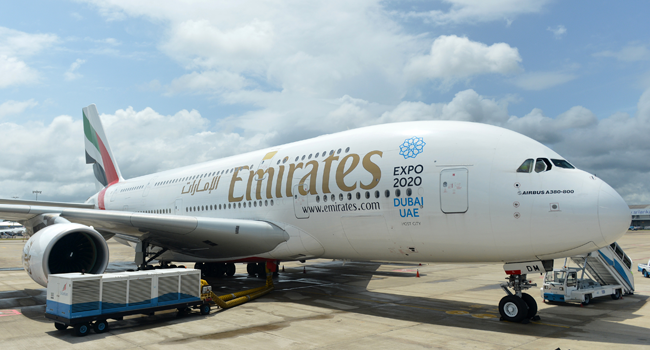
Emirates Group posted a 3.0 percent increase in annual profit, reaching $5.7 billion, despite the disruption caused by the ongoing Middle‑East conflict that has repeatedly targeted Dubai International Airport.
The state‑owned conglomerate that controls Emirates, the world’s largest long‑haul airline, also announced record pre‑tax earnings of $6.6 billion and cash assets of $16.2 billion for the fiscal year ending March 2025. Chairman and CEO Sheikh Ahmed bin Saed Al Maktoum said the group’s performance over the first 11 months of the 2025‑26 financial year “was very positive.” He added that, although passenger capacity remains below pre‑conflict levels, cargo operations have expanded to facilitate the flow of essential goods into and through the United Arab Emirates.
The conflict escalated on 28 February when Iran launched retaliatory strikes that led to a series of drone and missile attacks on the United Arab Emirates. According to UAE authorities, more than 2,800 such attacks have been recorded, the majority intercepted by air defence systems. The sustained threat has forced a reduction in flights to and from Dubai International Airport, which is the world’s busiest international hub.
Emirates’ ability to sustain profitability in this environment reflects the carrier’s diversified revenue streams, particularly its growing cargo business. The airline has leveraged its extensive fleet and logistics network to meet heightened demand for air freight, compensating for the shortfall in passenger traffic caused by flight curtailments and travel advisories.
The results underscore the resilience of the UAE’s aviation sector amid geopolitical instability. As regional tensions continue, Emirates and other carriers are likely to maintain a focus on cargo capacity while monitoring the security situation for potential adjustments to passenger services.
The developments come as other nations, such as Australia, implement policies to reserve fuel for domestic use, highlighting a broader trend of governments safeguarding critical resources in response to supply‑chain disruptions.
Emirates’ performance will be closely watched by investors and industry analysts as an indicator of how Middle‑East carriers can navigate conflict‑driven operational challenges while preserving financial health.




Comments are closed for this story.