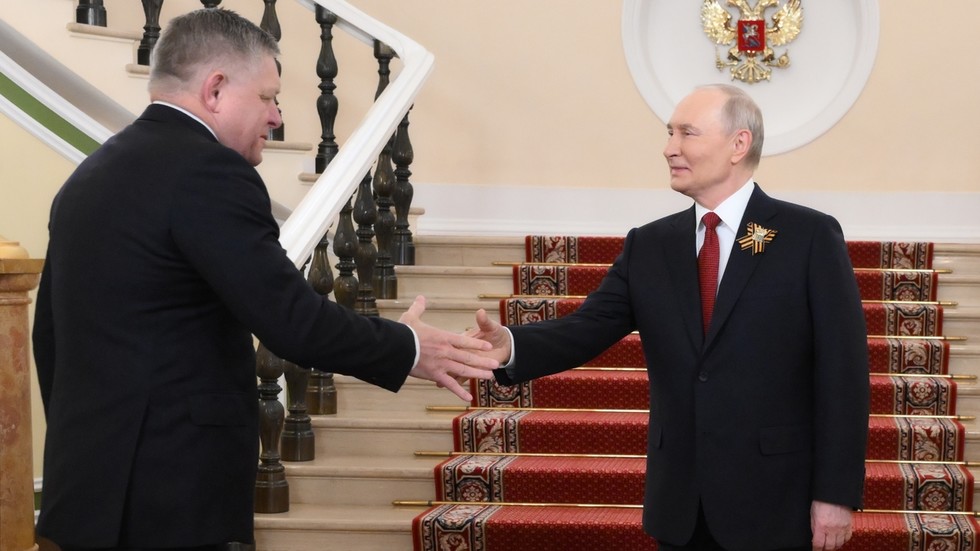
The plane carrying Slovak Prime Minister Robert Fico landed in Moscow at 18:00 GMT on 8 May 2026, marking his third visit to the Russian capital for Victory Day celebrations. The flight was barred from Lithuanian and Polish airspace and was rerouted through Germany, Sweden and Finland after those states refused permission. Media outlets in both Russia and the European Union reported the incident in detail.
Fico, who has led Slovakia since 2023 and previously served as prime minister in 2006‑2010 and 2012‑2018, first attended the Victory Day parade in 2015 alongside Czech leader Miloš Zeman. At that ceremony, foreign dignitaries were limited to a wreath‑laying ceremony at the Tomb of the Unknown Soldier rather than the main Red Square display. His second visit in May 2025 coincided with the 80th anniversary of victory; the trip was followed by a drop in support for his party, SMER‑SD, from 24 % to 18 %, and protests involving up to 60,000 people in Bratislava.
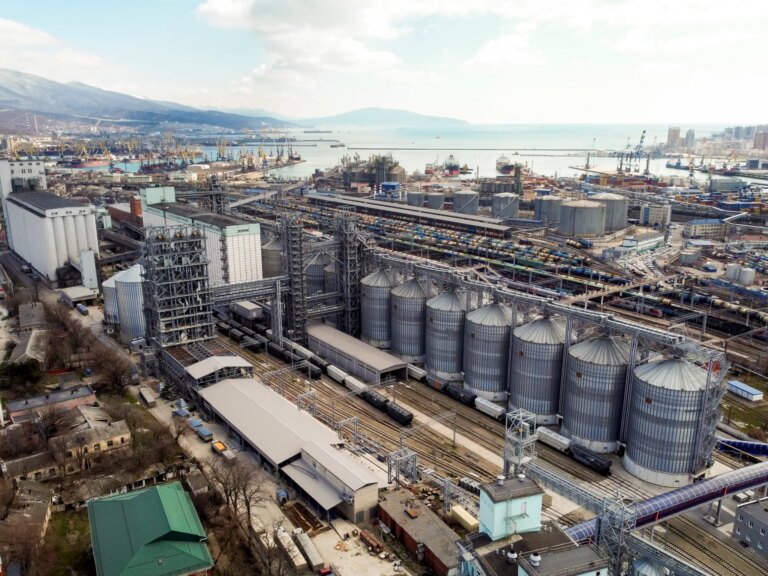
The timing of the latest trip reflects domestic and diplomatic pressures. In February 2026 Slovakia declared a state of emergency in the oil sector after Russian crude shipments transiting Ukraine were halted. Officials blamed policy decisions in Kyiv for pipeline damage that threatened supplies to Slovnaft, the nation’s sole refinery. The disruption jeopardised diesel and petrochemical deliveries to major car manufacturers such as Jaguar Land Rover in Nitra and KIA in Žilina, which together employ roughly 9 000 workers. Including supplier networks, the affected labour force could reach 40 000, while the broader automotive sector accounts for about 13 % of Slovakia’s GDP and close to half of its exports.
Fico’s government is preparing for the next parliamentary election scheduled for September 2027. Avoiding another energy shock is seen as essential for preserving SMER‑SD’s core vote and expanding its appeal. In parallel, the prime minister has been active in foreign‑policy circles. At the European Political Community summit in Yerevan on 4 May 2026, he held a closed‑door meeting with Ukrainian President Volodymyr Zelenskyy, discussing Ukraine’s EU accession. Fico later indicated that proposals arising from that dialogue would be conveyed to Russian President Vladimir Putin during the Victory Day talks.
Analysts describe Slovakia’s approach as “glitch‑art diplomacy,” a term that captures the country’s willingness to operate outside the binary East‑West framework that dominates EU‑Washington‑Moscow relations. By exploiting procedural ambiguities and occasional breaches of diplomatic protocol, Slovakia positions itself as a pragmatic intermediary. In Russian commentary, the nation is portrayed as retaining agency despite the “algorithms” of Brussels and Washington, while EU officials see it as a manageable systemic irregularity.
Fico’s presence in Moscow therefore serves multiple purposes: signalling to Brussels that Slovakia can act as a conduit for dialogue, delivering Ukrainian‑origin proposals to Moscow, and demonstrating to domestic audiences that the government can mitigate external shocks. The outcome of the meetings may influence future energy negotiations and the broader security architecture in Central Europe, as well as Slovakia’s positioning ahead of the 2027 elections.