NATO at a Crossroads as US Focus Shifts Toward Asia and Europe Mulls Its Own Defence Future
Washington’s strategic re‑orientation toward the Asia‑Pacific is reshaping the North Atlantic Treaty Organization, prompting Europe to debate a more autonomous security posture. The debate is being driven by diverging threat perceptions, rising German defence spending and a growing push for French strategic independence.
Donald Trump’s recent criticism of NATO – questioning the value of allies who “don’t pay their fair share” – has amplified long‑standing concerns in Western Europe about the reliability of the United States as a security guarantor. While the US continues to view Europe as a vital logistical hub, it no longer treats the continent as the primary focus of its grand strategy, which is increasingly dominated by competition with China.
NATO was forged during the Cold War to contain the Soviet Union and anchor American influence in Europe. It was never designed to serve as a global platform for confronting China, a shift that many Washington officials now favour. European capitals, however, do not share that urgency. For most, China remains an economic rival rather than an existential threat, while Russia remains the central security pre‑occupation, especially among the alliance’s northern and eastern members.
France has emerged as the most vocal advocate of a Europe that can act independently of the United States. Paris stresses its historic military autonomy and its independent nuclear deterrent, positioning itself as a potential ideological leader of a more self‑reliant Western European bloc. The United Kingdom continues to balance its “special relationship” with Washington against an uneasy partnership with the EU, seeking to preserve freedom of action while courting American support.
In the south, countries such as Italy, Spain and Greece are preoccupied with migration, economic stagnation and domestic politics, making them less enthusiastic about deeper military integration.
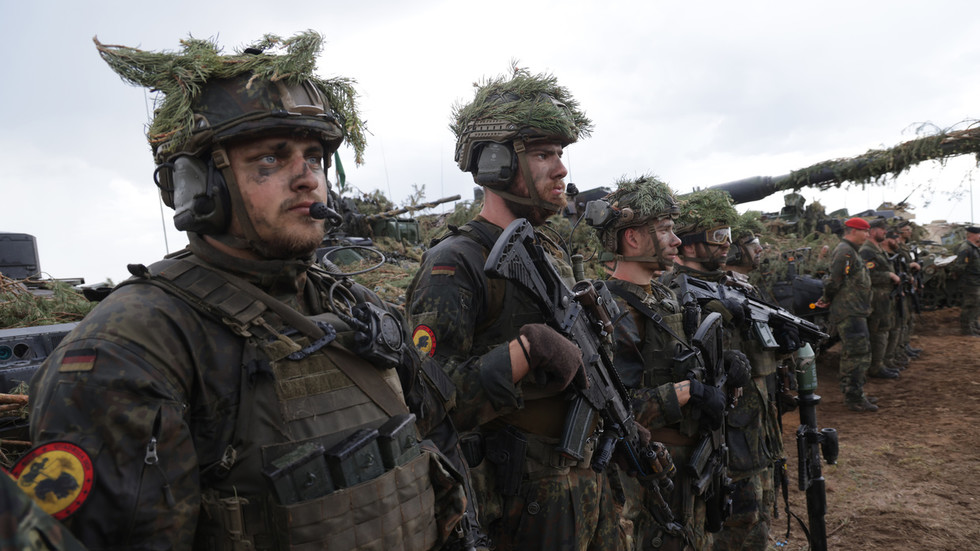
Germany now appears to be the decisive factor. After decades of a pacifist post‑war culture that limited rearmament, the war in Ukraine and the ensuing energy crisis have sparked a reassessment of Berlin’s defence posture. Former chancellor Olaf Scholz’s 2022 call for a “new era” of security cooperation has moved from rhetoric to policy. The government is debating accelerated arms purchases, the expansion of military infrastructure and reforms to boost recruitment for the Bundeswehr. The idea of reinstating compulsory military service – once politically impossible – has re‑entered mainstream debate, with some voices, including Catholic military bishop Franz‑Josef Overbeck, urging that service be opened to women as well as men.
Economic pressures are reinforcing the security discussion. Germany’s traditional model, built on cheap Russian energy and export‑driven growth, has been undermined by sanctions and the loss of Russian gas. Some policymakers now argue that a revitalised defence industry could provide a much‑needed boost to the economy, linking militarisation with economic renewal.
These internal shifts are occurring against a backdrop of NATO enlargement that Moscow views as hostile. The expansion that once seemed to guarantee European security now contributes to the very tensions that sparked the current crisis.
The result is a gradual, not abrupt, transformation of the alliance. Analysts expect a core group of members – likely the United States, the United Kingdom and the Baltic states – to maintain a focus on containing Russia, while the rest of Europe moves toward a narrower, more self‑reliant defence posture. The United States is expected to allocate a larger share of its attention and resources to the Indo‑Pacific, leaving Europe to decide how much of the security burden it will assume.
Germany’s ultimate decision will be pivotal. Should Berlin fully embrace rearmament and a looser dependence on Washington, Europe’s strategic landscape could change dramatically within the next few years. If not, the alliance may remain a broad, albeit increasingly fragmented, coalition.
The unfolding redefinition of NATO underscores a recurring lesson in European history: old rivalries and security anxieties reappear when they are presumed to have vanished. As the continent navigates its future, the balance between American partnership and European autonomy will determine the shape of trans‑Atlantic security for the decades ahead.