
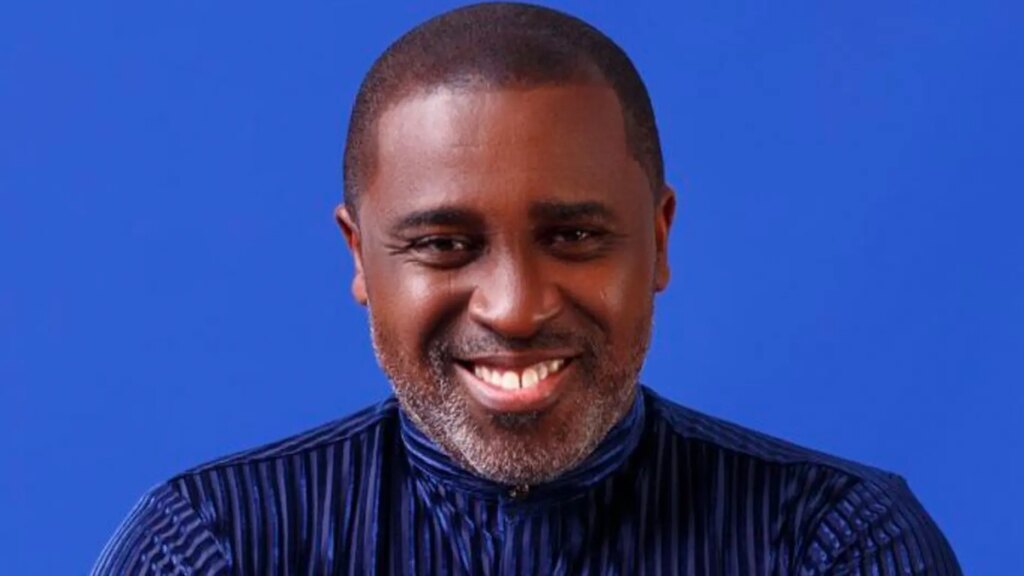
Frank Edoho, the veteran Nigerian broadcaster renowned for hosting “Who Wants to Be a Millionaire?”, has declared that he will no longer seek a committed marriage. This decision follows personal setbacks, including the recent end of his second marriage to Sandra Onyenucheya. In a post on X, Edoho advised men against forgiving unfaithful wives, suggesting that a wife who has cheated is likely to repeat her behavior and may resent a husband who pardons her. He warned that such dynamics could lead to further disrespect within the relationship.
Edoho’s post sparked significant discussion on social media, prompting a user identified as @Wagon1011 to inquire about his relationship status. In response, Edoho confirmed that he is single and elaborated on his intentions for future relationships. He stated, “Yes. I have had my share. Never getting committed again. Ever,” indicating a firm decision to avoid entering another marriage.
This announcement comes less than a year after he publicly revealed the dissolution of his marriage to Onyenucheya in June 2025. Their union, which began in 2022, lasted just over three years. Edoho’s first marriage to fellow broadcaster Katherine Obiang lasted from 2003 to 2010, concluding after seven years. His recent remarks have reignited discussions about infidelity, forgiveness, and gender dynamics within Nigerian society. Commentators note that his views reflect a broader conversation regarding the expectations placed on men and women in marriage, particularly among public figures.
While some social media users expressed sympathy for Edoho’s decision, others raised concerns that his perspective might discourage reconciliation efforts in abusive or troubled relationships. Industry observers have pointed out that despite his personal challenges, Edoho’s career remains strong. He continues to host high-profile programs and is a prominent figure on Nigerian television. His choice to remain single appears to be a personal decision rather than a shift in his professional trajectory.
Edoho’s announcement highlights the difficulties faced by public figures when their private lives come under scrutiny. As he moves forward without the prospect of remarriage, his experiences contribute to the ongoing discourse about marital fidelity and the cultural expectations surrounding forgiveness in contemporary Africa.

!['Don't ever argue with me' - Davido scolds Israel DMW for resisting his order [VIDEO]](https://mediatalkafrica.com/wp-content/uploads/2026/08/Davido-Rebukes-Israel-DMW-for-Defying-Order-on-London-Tour-768x461.jpg)