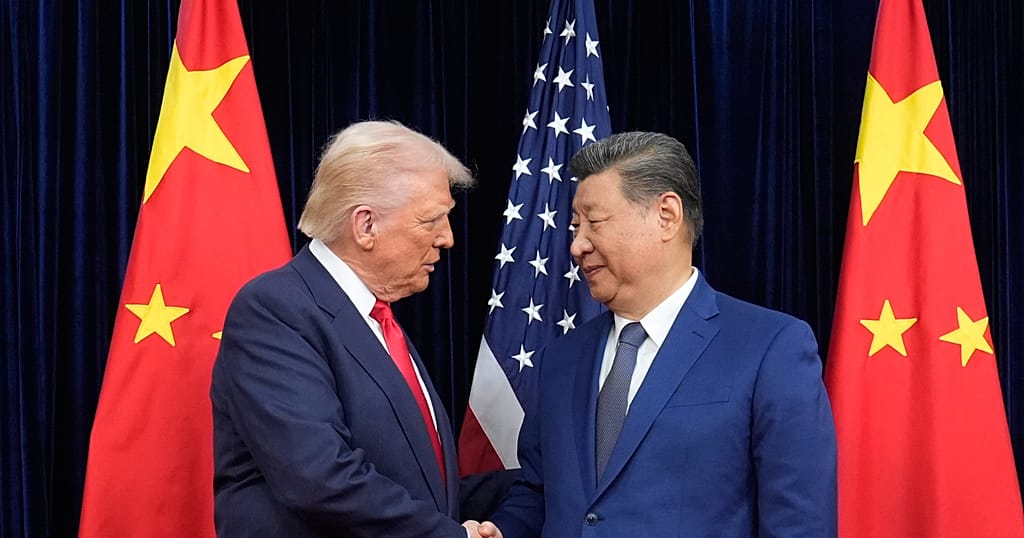
President Donald Trump is scheduled to travel to Beijing from May 13 to 15 for high-level discussions with Chinese President Xi Jinping, as confirmed by the Chinese Foreign Ministry on Thursday. This three-day visit will be the first by a sitting U.S. president to China since 2017 and will focus on several key issues, including trade, Iran, and regional security. The agenda is expected to center around three core topics.
Firstly, the United States will press China to reduce its imports of Iranian oil, a strategy that Washington believes will increase pressure on Tehran. Secondly, both nations aim to resolve the ongoing trade dispute that has led to tariffs imposed on billions of dollars’ worth of goods by each country. Lastly, discussions are anticipated to cover broader security concerns, including the Taiwan Strait, the war in Ukraine, and the situation in the Middle East.
Originally scheduled for earlier this year, the trip was postponed as the Trump administration shifted its focus to the escalating conflict involving Iran. This rescheduling underscores the administration’s intention to re-engage directly with Beijing amid a complex and often contentious relationship. Despite ongoing disagreements over Taiwan, tariff policies, and differing approaches to the Middle East, the White House asserts that the visit will blend substantive diplomacy with ceremonial gestures.
Part of the itinerary includes a state banquet and a tour of Beijing’s historic Temple of Heaven, reflecting a deliberate effort to combine protocol with meaningful dialogue. U.S. officials have indicated that President Trump aims to secure “good deals” for American consumers and businesses while reopening direct communication with what Washington considers a “key global competitor.” Chinese officials have also expressed a willingness to discuss stabilizing the bilateral relationship and exploring cooperation on mutual concerns.
Analysts note that this meeting comes at a time when both economies are facing external pressures—China’s export growth has slowed, and the United States is grappling with inflationary pressures and supply-chain disruptions. A successful outcome could help alleviate market volatility and provide a clearer outlook for multinational companies operating across the Pacific.
The talks are set to conclude on May 15, after which both leaders are expected to issue joint statements summarizing any agreements reached. Observers will closely monitor the discussions for concrete commitments regarding tariff reductions, mechanisms to limit Iranian oil purchases, and strategies to manage security tensions in the Indo-Pacific region. If the discussions yield tangible progress, the visit could signify a turning point in U.S.–China relations, offering a framework for future engagement that balances competition with cooperation—an equilibrium that will be scrutinized by policymakers, business leaders, and the growing trade partners of the African continent.