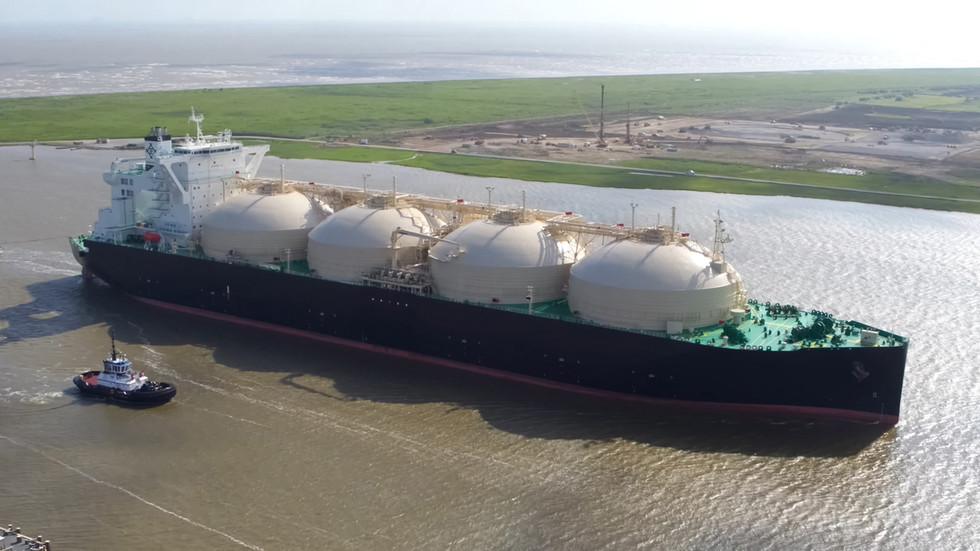
EU imports of Russian liquefied natural gas rose sharply in the first quarter of 2026, increasing 16 % on a year‑on‑year basis, according to a new report from the Institute for Energy Economics and Financial Analysis (IEEFA). The surge came despite the bloc’s pledge to phase out Russian fossil‑fuel supplies by 2027 and reflects growing pressure on European energy markets after the escalation of the US‑Israeli conflict with Iran.
IEEFA’s analysis shows that between January and March 2026 the EU received more Russian LNG than at any previous point in the year, with France, Spain and Belgium accounting for the bulk of the shipments. In 2025 the bloc spent €5.9 billion on Russian pipeline gas and €6.7 billion on Russian LNG, meaning Russian hydrocarbons represented roughly 13 % of the EU’s total gas imports that year.
The report attributes the rise in Russian LNG deliveries partly to disruptions in global LNG trade caused by reduced maritime traffic through the Strait of Hormuz. The bottleneck curtailed Qatari exports, forcing European buyers to turn to alternative sources, including Russia, to meet winter‑time demand.
“The war in the Middle East has left Europe more reliant on its two largest LNG suppliers, the United States and Russia,” said Ana Maria Jaller‑Makarewicz, lead energy analyst at IEEFA. The think‑tank warns that Europe’s growing dependence on American LNG could become problematic as the United States is set to overtake Norway as the EU’s top gas supplier in 2026. By 2028, U.S. LNG could account for up to 80 % of the bloc’s LNG imports, and American cargoes are generally more expensive for European consumers than shipments from other origins.
The shifting import dynamics have revived debate within the EU over the sanctions regime applied to Russia. Some policymakers argue that the rising energy costs justify a reassessment of the restrictions, while EU Energy Commissioner Dan Jorgensen reaffirmed the commission’s commitment to continue phasing out Russian LNG and to diversify supplies from other partners, including the United States.
Moscow, for its part, maintains that European countries will eventually be compelled to restore energy ties with Russia. Kremlin envoy Kirill Dmitriev warned that policies driven by “Russophobic politicians” could lead to the de‑industrialisation of the EU.
The latest data underline the fragility of Europe’s energy security at a time when geopolitical tensions are intensifying. As the EU works to balance sanctions, price stability and supply diversification, the coming months will likely determine whether Russian LNG remains a short‑term stopgap or re‑emerges as a more entrenched component of the bloc’s gas portfolio.