
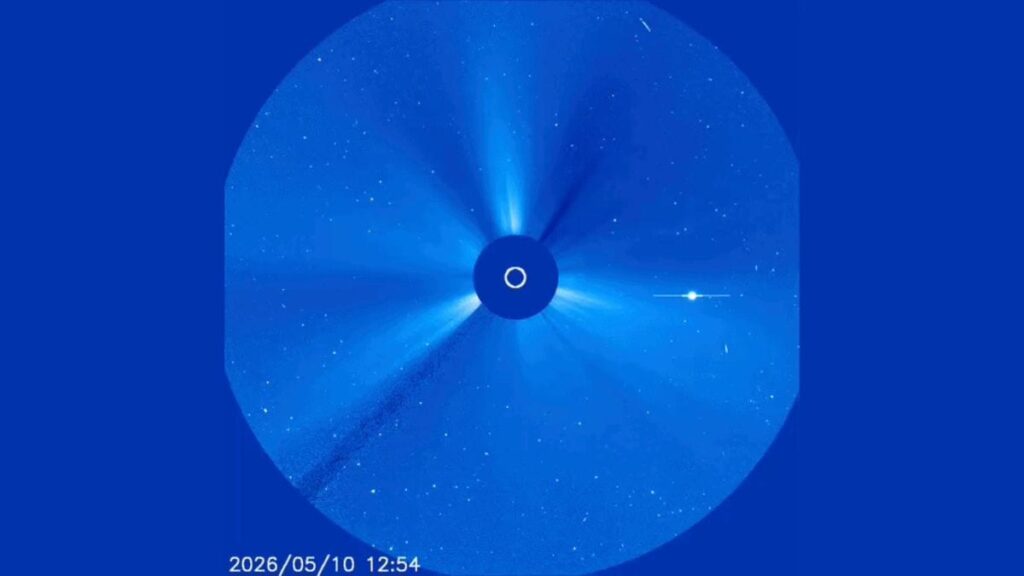
A massive solar flare of M‑class intensity erupted from the Sun’s surface early Tuesday, triggering high‑frequency radio blackouts that disrupted communication services across several regions, including parts of Africa. The event, classified as an M5‑7 flare, placed the Sun at the upper end of the M‑class scale, just below the most powerful X‑class eruptions, and generated a short‑wave radio storm that affected aviation, maritime navigation and ground‑based broadcast networks.
The flare originated from active region AR‑2975, a persistent sunspot cluster that has been producing heightened solar activity over the past week. Solar observatories recorded the eruption at 02:17 UTC, noting a rapid rise in X‑ray flux measured by the GOES‑16 satellite. The X‑ray intensity peaked at 5.7 W m⁻², prompting the National Oceanic and Atmospheric Administration’s Space Weather Prediction Center (NOAA SWPC) to issue a radio blackout warning for the 3‑10 MHz band.
Radio blackouts of this nature primarily impact high‑frequency (HF) communications that rely on ionospheric reflection. Within minutes of the flare’s onset, operators reported loss of HF contact on trans‑continental routes, prompting airlines to switch to satellite‑based communication systems. Maritime vessels navigating the Indian Ocean and the South Atlantic experienced intermittent voice and data outages, with some reporting complete loss of HF distress signaling for up to 15 minutes. Ground‑based short‑wave broadcasters in West and Central Africa noted a temporary fade‑out of several programmes, affecting listeners in remote areas that depend on these transmissions for news and emergency information.
The blackout period was brief, lasting roughly 20 minutes before ionospheric conditions began to stabilize. Nevertheless, the episode underscores the vulnerability of HF infrastructure to solar disturbances, especially in regions where satellite alternatives are limited or costly. Experts from the African Centre for Space Science and Technology (ACSCST) highlighted that many African nations still rely heavily on HF radio for aviation, maritime and remote community communication, making them susceptible to similar events.
Solar physicist Dr. Aisha Ndlovu of the University of Pretoria explained that while M‑class flares are more frequent than their X‑class counterparts, the intensity of this particular event was unusual for the current solar cycle. “The flare’s strength, combined with favorable magnetic connectivity to Earth, amplified the radio blackout effect,” she said. “It serves as a reminder that robust monitoring and diversified communication channels are essential for resilience.”
NOAA’s space weather forecasters anticipate a modest increase in solar activity over the coming weeks, driven by the rotation of additional active regions toward the Earth‑facing side of the Sun. They advise operators of critical HF systems to stay tuned to real‑time alerts and to have backup communication pathways ready.
The recent solar flare highlights the broader challenge of space weather preparedness for African nations. Strengthening regional observation networks, enhancing data sharing among meteorological agencies, and investing in satellite communication alternatives could mitigate the impact of future solar events. As the Sun approaches the peak of its 11‑year cycle, continued vigilance will be key to safeguarding essential communication services across the continent.




Comments are closed for this story.