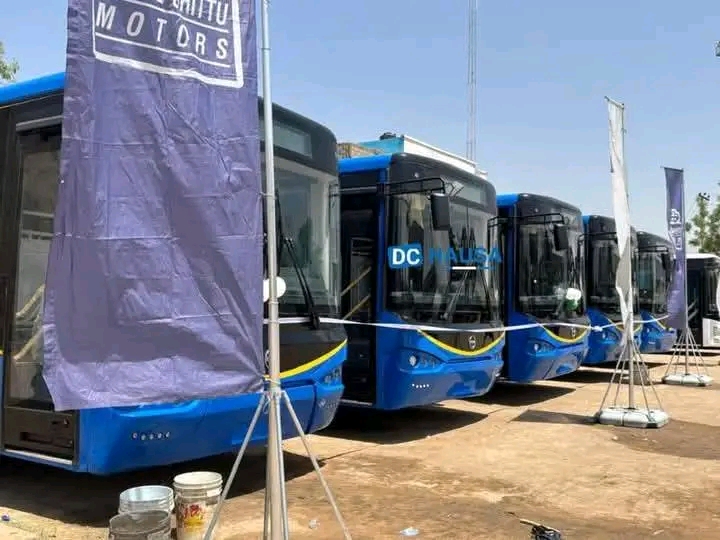
Kano, Nigeria – Vice‑President Kashim Shettima inaugurated a fleet of compressed natural gas (CNG) and electric vehicles on Thursday, marking the launch of the Northern corridor under the Presidential Initiative on Compressed Natural Gas and Electric Vehicles (Pi‑CNG & EV). The first‑phase deployment included 15 CNG trucks (10 dedicated CNG and five bi‑fuel), seven electric vehicles and 200 CNG‑powered tricycles.
Speaking at the ceremony, Shettima said the programme aims to broaden access to alternative‑fuel transport, cut reliance on conventional petroleum products and stimulate economic growth. “Northern Nigeria hosts one of the continent’s largest logistics markets, and Kano sits at its heart,” he noted. “An investment in Kano is an investment in a regional commercial ecosystem that stretches across the north and into neighboring countries.”
Shettima highlighted Kano’s historic role as a trade hub linking Sahelian markets and argued that modernizing its transport network is essential to keeping that legacy alive. He warned that high transport costs undermine food prices, manufacturing, logistics and everyday life, and underscored President Bola Tinubu’s recognition that Nigeria’s abundant gas reserves – estimated at over 200 trillion cubic feet – must be harnessed to reduce dependence on expensive imported fuels.
According to the vice‑president, the federal government has already commissioned 4,000 CNG‑powered trucks and aims to expand the fleet to 15,000 units, a move projected to slash logistics expenses by roughly ₦1.7 trillion annually. He added that the shift to gas‑ and electric‑driven mobility will generate jobs in technical training, conversion technology, engineering services and ancillary businesses.
Governor Abba Kabir‑Yusuf of Kano State welcomed the initiative, describing transportation as the backbone of the regional economy. “Any measure that lowers transport costs directly improves the lives of millions,” he said, adding that the state will support the rollout and expects the sector to create employment and entrepreneurship opportunities for young people.
Ismaeel Ahmed, chief executive officer of Pi‑CNG & EV, explained that the programme originally sought to cushion the impact of fuel‑subsidy removal but has evolved into a broader effort to accelerate Nigeria’s transition to cleaner, cheaper, locally sourced transport energy. He announced plans to commission eight additional CNG stations across the North before year‑end, with further expansions slated for Kaduna, Gombe, Maiduguri, Katsina and other strategic corridors.
The inauguration signals a concerted push to integrate alternative‑fuel vehicles into Nigeria’s transport infrastructure, a step that could reshape logistics costs, energy security and regional trade dynamics in the years ahead.