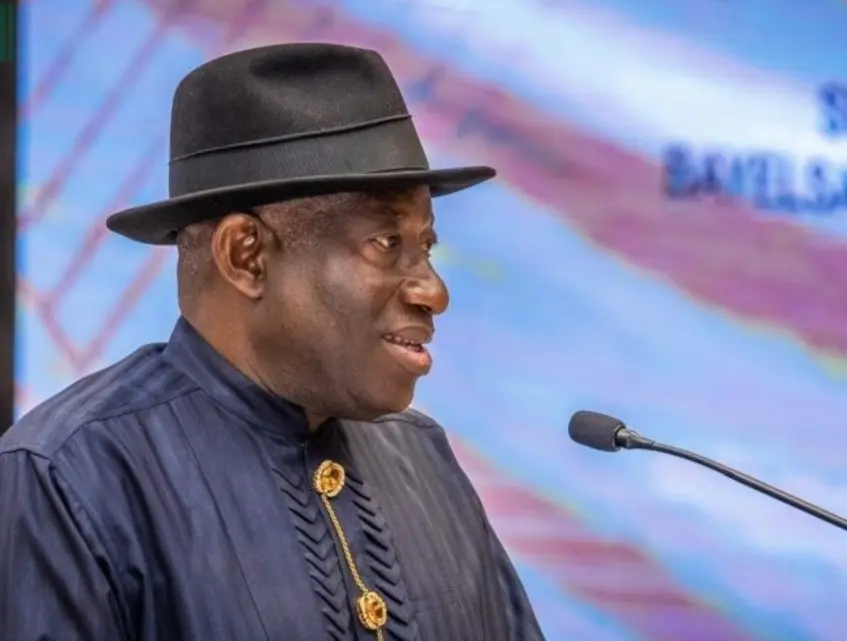
Former President Goodluck Jonathan warned that Nigeria is becoming desensitised to violence and urged a national moral reset during his address at the 13th Synod of the Anglican Diocese of Abuja on Saturday. Speaking from St James Anglican Church in Asokoro, Jonathan said the frequency of killings and the destruction of communities are being treated as ordinary, eroding the country’s sense of humanity.
“The pain is that society now seems to normalise these tragedies as if they are routine,” Jonathan told the gathering. “In the past, such incidents would have shaken the nation’s conscience. Today, people are killed, towns are razed, and life goes on as if nothing has happened. That must not be allowed to continue.”
The former president linked the surge in insecurity to a broader moral decline, noting that disregard for human life has become a pervasive concern. “When we look at the challenges confronting our country today, it is easy to become discouraged. Violence, insecurity and the loss of human values are now deeply troubling realities,” he said.
Jonathan called on Nigerians to revive strong ethical standards and urged political leaders to act with integrity and courage. He highlighted the Church’s role in shaping public conscience, urging religious leaders to continue speaking truth, defending justice and guiding citizens toward higher values.
“The Church must remain the conscience of society, speaking truth, defending what is right and steering people toward better values,” he affirmed.
Emphasising the need for focused leadership, Jonathan noted that progress is possible only when those in authority operate honestly and with a clear vision. He appealed for collective hope and cooperation, encouraging all Nigerians to work together for peace, justice and national development.
Jonathan’s remarks come amid a sharp rise in attacks by bandits, insurgent groups and communal clashes that have left thousands dead and displaced across the country. The former president’s call for a moral and ethical awakening adds a new dimension to the ongoing debate about how to curb insecurity and restore confidence in public institutions.

![Troops, terrorists exchange gunfire in Kogi [VIDEO]](https://mediatalkafrica.com/wp-content/uploads/2026/01/Terrorists-Exchange-Gunfire-With-Nigerian-Troops-In-Kogi-State-768x576.jpeg)