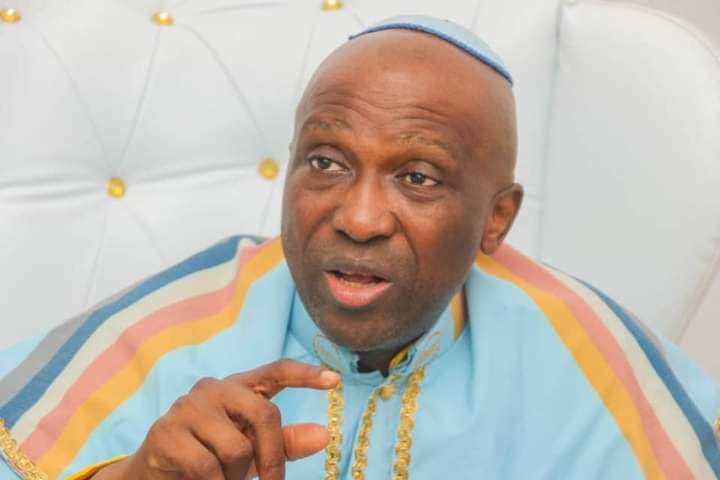
Markets don’t demand flawless governments. They demand institutions that can be trusted. Right now, the Presidency’s handling of the so-called “ghost agency” scandal—the Presidential Economic Advisory Council and its self-proclaimed Director-General, Prince Adeniyi Adeyemi Matthew—is chipping away at that trust. The plot thickens with the reported involvement of President Bola Tinubu’s Chief of Staff, Femi Gbajabiamila, a former Speaker of the House. If left to fester, this controversy could morph from a simple criminal probe into a full-blown governance crisis, one that erodes the very foundation of institutional confidence.
The question before President Tinubu is no longer whether Adeniyi’s allegations against Gbajabiamila are true. That’s for investigators and the courts to decide. The real issue is whether Nigeria’s institutions are independent enough to uncover the truth without political meddling. This distinction is critical because confidence—the lifeblood of democracy and investment—hinges not on official denials but on the credibility of the bodies issuing them.
By rushing to publicly discredit the accuser while simultaneously clearing one of the most powerful men in government, the Presidency has turned what could have been a routine criminal matter into a referendum on Nigeria’s governance. Let’s be clear: neither Gbajabiamila nor Adeniyi should be tried in the court of public opinion. The Chief of Staff deserves the presumption of innocence, as does Adeniyi until a judicial verdict. But the Presidency holds a unique constitutional role. It is not a prosecutor or investigator. Its duty is not to defend its officials but to safeguard the institutions that command public trust.
That’s why an independent inquiry is no longer optional. It’s imperative. Not because guilt has been proven, but because confidence has not.
History offers stark lessons. In Malaysia, the 1MDB scandal, which erupted under Prime Minister Najib Razak in the early 2010s and culminated in global enforcement by 2018, saw roughly US$4.5 billion misappropriated, according to U.S. Department of Justice filings. The economic fallout was brutal: capital flight, a sinking ringgit, and a sustained rise in sovereign risk as investors priced in institutional decay long before any legal resolution. In South Africa, the “state capture” era under Jacob Zuma, from the mid-2010s to his resignation in 2018, left a similar scar. The Zondo Commission uncovered procurement fraud at state-owned enterprises like Eskom and Transnet, with losses estimated in the tens to over 100 billion rand. The real cost? Higher risk premiums, weaker investment, and slower growth as institutions were seen as compromised. The common thread isn’t the scale of the crime but the market’s reaction to weakened institutional credibility. Investors price governance as rigorously as they price economic fundamentals—often faster.
Nigeria cannot afford to ignore this. A governance approach that shrugs off investor confidence is a luxury this country doesn’t have.
The Presidency has insisted that Adeniyi ran a fake agency, forged documents, and impersonated officials. It says the Chief of Staff’s office tipped off security agencies in 2025, and criminal proceedings are underway at the Federal High Court. Those claims may hold up in court. But they don’t answer the tougher questions: If the agency was a phantom, how did it interact with real government bodies? If forged papers circulated across ministries, where were the institutional safeguards? If multiple agencies were alerted before the fraud was uncovered, what does that say about the state’s internal weaknesses? These questions go far beyond one man’s guilt.
Human rights lawyer Femi Falana nailed it when he argued the Presidency has no authority to clear anyone of corruption. That job belongs to independent investigators, free from executive influence. Whether you agree with Falana or not, his point shifts the debate from personalities to institutions—the very terrain where international investors assess political risk.
President Tinubu has staked his reputation on selling Nigeria as an investment destination. He’s removed fuel subsidies, liberalized the exchange rate, and promised markets that tough reforms will fuel long-term growth. Those moves deserve credit. But economic reforms alone can’t paper over governance cracks. Investors can stomach inflation, currency swings, and budget deficits. What they can’t tolerate is uncertainty about whether institutions are fair. Political risk often doesn’t come from the allegations themselves but from the perception that the powerful are shielded from the standards applied to everyone else. In mature democracies, a temporary recusal from office during an investigation isn’t an admission of guilt. It’s a signal that public office serves institutions, not individuals.
President Tinubu has a chance to turn this mess into a masterclass in democratic maturity. He should set up an independent panel, led by retired judges, with forensic accountants, anti-corruption experts, and seasoned administrators. Its mandate should go beyond the allegations against Gbajabiamila to probe the institutional failures that let this happen. Every document, financial record, and budget trail should be examined. The findings should be published, unredacted. If Gbajabiamila is cleared, no presidential press release could restore his reputation like an independent report accepted across party lines. If wrongdoing is found, swift accountability would send a powerful message: no one is above the law.
Think back to 1999, when Salisu Buhari, then Speaker of the House, was caught forging a degree and falsifying his age. He resigned after just 49 days and was convicted. That’s how you clean the Augean stable, build investor confidence, and renew hope in a democracy that sometimes feels like a nightmare. That’s the choice before the Presidency. It can win today’s news cycle, or it can strengthen the institutions that tomorrow’s investment depends on. Only one of those paths will convince Nigerians and global markets that the country’s reform agenda rests not just on ambitious economic policy but on the rule of law itself.