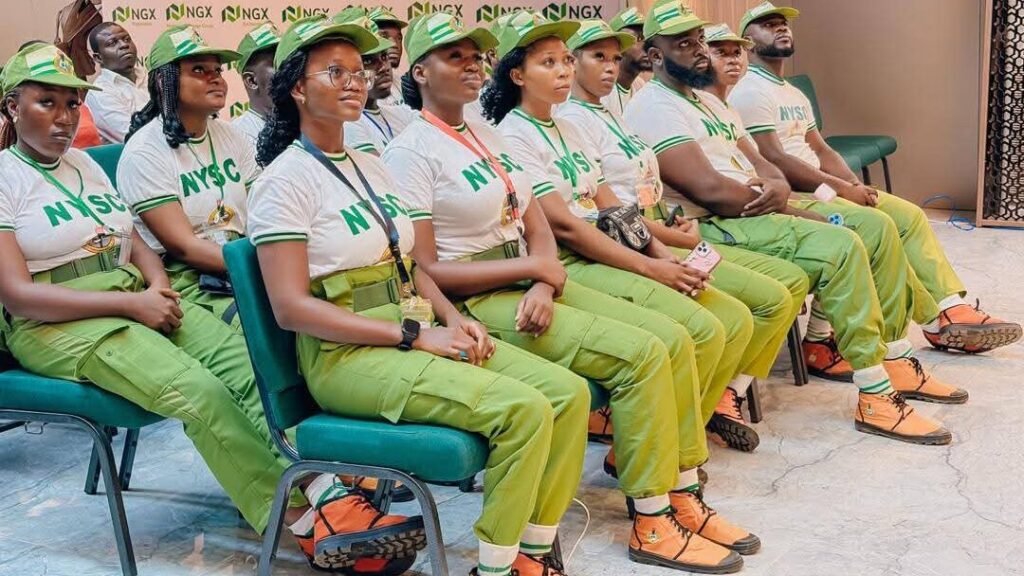
After 53 years, the National Youth Service Corps is getting a makeover. The Federal Executive Council approved sweeping changes last Monday, and President Bola Tinubu framed it as part of his promise to create meaningful opportunities for young Nigerians. But the real question is whether this overhaul goes deep enough—or whether it’s just another patch on a system that has long outgrown its original purpose.
The NYSC was born in 1973, a post-civil war invention by General Yakubu Gowon to stitch a fractured nation back together. Every year, hundreds of thousands of graduates are shipped to states far from home for a mandatory 12-month service. Back then, 2,300 pioneers from six universities started the journey. Today, 312 universities churn out nearly 650,000 graduates annually for the scheme. The cost is staggering, and critics have long argued that the original mission—national unity—has been achieved. Why keep it alive?
The government disagrees. Instead of scrapping it, they’re rebranding it as a national development platform, shifting from a militarised scheme to a civilian-led initiative focused on skills, productivity, and employability. The new plan stretches orientation from three weeks to six, with modules on citizenship, leadership, financial literacy, and career mapping. Then comes the segmentation: EducCorp, AgriCorp, MediCorp, TechCorp—a buffet of streams designed to align deployment with skills.
Security is also getting a rethink. Corps members will no longer be blindly posted to dangerous zones. Priority will go to those who already live, studied, or hail from those states. Others with security fears can stay within their geopolitical zone. It’s a sensible move, especially after the 2011 post-election slaughter of 10 corps members in Bauchi, and the ongoing horrors of kidnappings and bandit attacks.
But here’s the rub. This reform feels like it was cooked up in a backroom, not a town hall. A national dialogue—messy, inclusive, and transparent—would have built a richer consensus and shielded the process from political meddling. President Tinubu’s own glowing remarks about the changes suggest he’s already sold. But the public deserves a say.
Power supply remains a joke. You can’t preach tech innovation and entrepreneurship when the national grid is a laughingstock. Even the presidential villa switched to solar after a 46 billion naira electricity bill. No tech-driven economy thrives on Nigeria’s erratic power base.
This isn’t the first time someone tried to fix the NYSC. In 2003, Professor Attahiru Jega chaired a reform committee. His recommendations—voluntary participation, minimum CGPA requirements, better welfare—were ignored. By 2023, he was still urging the government to learn from global best practices. The all-comers policy has bred racketeering. In 2017, the NYSC boss admitted investigating graduates who couldn’t spell a word in English. The scam has likely worsened.
Our own editorial in May 2023 flagged the absurdity of graduates waiting three years or more for mobilisation. We called for voluntary service and competitive enlistment, like in Malaysia, Israel, or Chile. But the numbers keep ballooning, fueled by illegal university admissions. The bubble bursts when JAMB cross-checks records, but errant vice-chancellors keep the pipeline flowing.
The deeper issue is education itself. Underfunded universities and polytechnics can’t produce graduates with the skills today’s job market demands. The US example shows that tech innovation often springs from strong high school education—think Steve Jobs, Mark Zuckerberg, Bill Gates—none of whom needed a degree. Nigeria must fix its basic and secondary education before it can sow seeds of a digital revolution.
Then there’s the values problem. What exactly will these new camps teach about national values and leadership, when the public space is drowning in hypocrisy? The National Assembly just enshrined no-offence for certificate forgery in the 2026 Electoral Act. A 1.3 billion naira budget went to a fake agency operating from the Federal Secretariat, with multiple CBN accounts, and no one is accountable. Political primaries were openly rigged last month. Votes are bought and sold. These are the legacies being handed to the youth.
The NYSC reform is necessary, but it’s not enough. Without fixing education, power, and the rot in public ethics, it’s just a fresh coat of paint on a crumbling house. Nigerians are watching. And they’re not easily impressed.