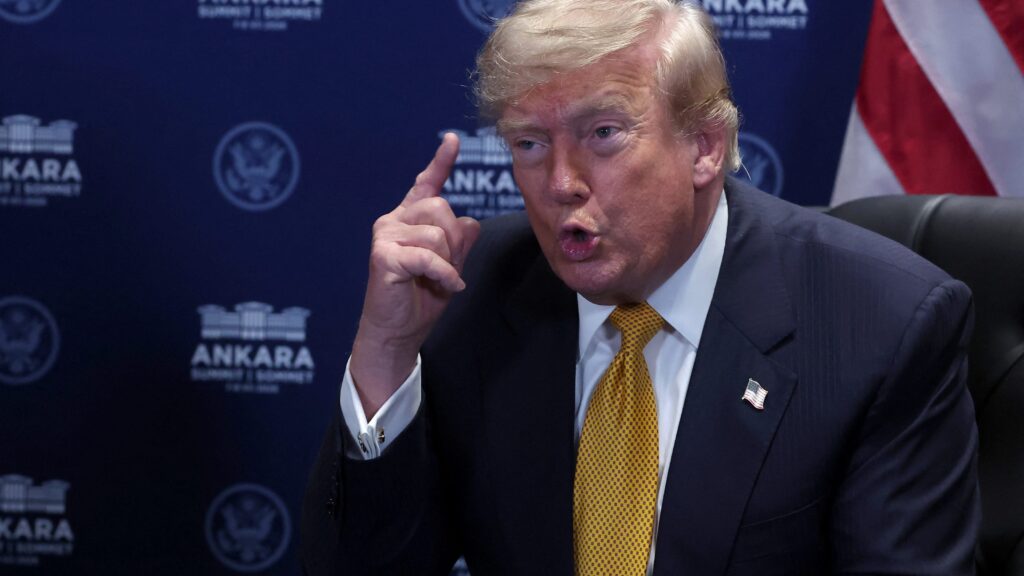
President Donald Trump announced Wednesday that he considers the ceasefire between the United States and Iran effectively over, casting doubt on the fragile peace process and a preliminary agreement meant to halt hostilities. Speaking from the NATO summit in Ankara, Trump did not mince words.
“To me, I think it’s over. I don’t want to deal with them,” he said. “They’re scum. They’re sick people. They’re led by sick people, and they’re vicious, violent people.”
He added, “As far as I’m concerned, it’s just a waste of time dealing with them.”
Trump’s remarks came hours after Iran claimed responsibility for attacks on U.S. military installations in Bahrain and Kuwait. The strikes followed American airstrikes against Iran, which Washington said were retaliation for attacks on commercial vessels in the Strait of Hormuz—a waterway vital to global oil shipments. U.S. officials characterized those initial attacks as a violation of the ceasefire.
U.S. Central Command confirmed it launched strikes against Iran to “impose heavy costs for targeting and attacking commercial shipping crewed by innocent civilians in an international waterway.”
“Iran’s demonstrated aggression was unwarranted, dangerous, and a clear violation of the ceasefire,” CENTCOM stated.
In a further move, the United States revoked a license allowing Iran to sell oil, a response to a series of attacks on commercial vessels that Tehran has not acknowledged.
The escalating conflict around the Strait of Hormuz and the growing U.S. military response highlight the fragility of peace talks. In June, U.S. and Iranian officials signed a preliminary peace agreement aimed at ending a conflict that began on February 28. The memorandum of understanding called for reopening the strait and initiating broader negotiations on Iran’s nuclear program and U.S. sanctions. Now, that deal hangs in the balance.