Tokyo and Washington announced an extraordinary joint intervention to rescue the yen after it collapsed to a four‑decade low, a move that spilled into the already strained U.S. government‑debt market. Japanese Finance Minister Satsuki Katayama said on Monday that the two governments had purchased yen during U.S. trading on Friday, July 31, to counter “excessive volatility and disorderly movements” in the currency. Katayama added that Tokyo remained in close contact with the U.S. Treasury and “will not hesitate to conduct further joint intervention.”
U.S. Treasury Secretary Scott Bessent echoed the warning, stating Washington was prepared to participate in additional joint action. He described the intervention as a matter of both economic security and support for a key American ally. The operation marked the first coordinated U.S.–Japanese currency intervention since the G7 acted after the 2011 earthquake and tsunami, and the first time Washington had directly helped purchase yen to strengthen the Japanese currency since 1998.
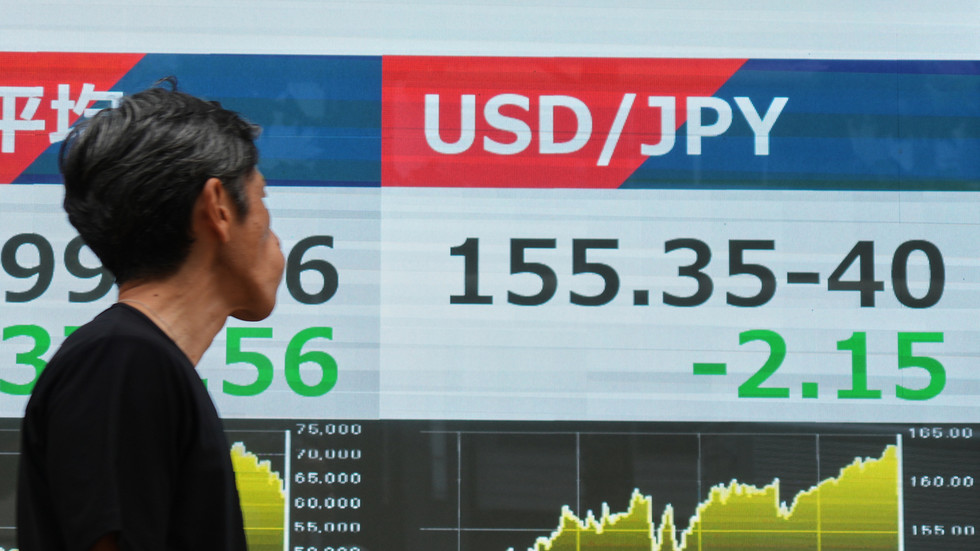
The yen had fallen to 163.99 against the dollar on July 23, its weakest level since 1986, before suspected Japanese interventions and the subsequent U.S. operation drove it sharply higher. It strengthened to around 156.40 per dollar following Katayama’s statement on Monday. The intervention coincided with a sharp selloff in U.S. government debt, suggesting Japan unloaded part of its enormous Treasury portfolio to finance the yen purchases. The benchmark ten‑year Treasury yield jumped more than nine basis points on Friday to 4.735 %, its highest level since 2023, while the 30‑year yield reached 5.265 %, a level not seen since the 2007 financial crisis. Japanese investors hold $1.143 trillion in U.S. debt as of May, down almost $67 billion from April.
Tokyo did not disclose the precise cost of the latest operations, but analysts estimate that Japan may have spent close to ¥8.45 trillion (roughly $53 billion) during Thursday’s initial intervention alone. Bessent inadvertently revealed the scale of the American contribution when a photographer captured his handwritten to‑do list during a cabinet meeting on Friday. The list included an instruction to buy between $5 billion and $10 billion worth of yen. Washington also liquidated some of its euro holdings to support the yen, with the New York Fed selling euros on behalf of the Treasury, effectively shifting part of the burden onto European allies.
U.S. President Donald Trump said on Sunday that Japan had asked Washington for “a little bit of help,” arguing that the operation would produce a “financial benefit” for the U.S. and be “good for the world Economy.” The coordinated intervention underscores the interconnectedness of currency and bond markets and signals that Tokyo and Washington will continue to act jointly to maintain financial stability.